

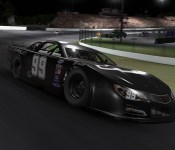
Lowe Clinches Championship with Dramatic Comeback at Hickory
Hickory, NC — The Bootleg Racing League SteelCraft Structures Super Late Model Series delivered a night of chaos, resilience, and ultimately championship glory in Round 10 at Hickory Motor Speedway. James Lowe, the season’s dominant force, overcame a disastrous opening lap and a trip to the rear of the field to score his seventh victory of the season, officially locking up the Season 26 championship in dramatic fashion.
The race barely had time to breathe before it erupted into turmoil. As the green flag waved, front-row starter Chris Haizlip spun his tires, triggering a chain reaction that swallowed nearly half the field in a violent stack-up. Cars scattered in every direction, and among the biggest names caught in the wreckage were Lowe and Jeffery Hardin, both forced to pit for repairs before the race had even truly begun. What was expected to be a coronation night for Lowe instantly turned into a survival mission.
Out of the early smoke and confusion emerged an unlikely commander of the race: Steve Hilbert, known around the paddock as “The Chief.” Hilbert took control of the race and proceeded to dominate the early and middle portions, eventually leading a commanding 66 laps. His run at the front wasn’t without its quirks, however. During one caution period, Hilbert failed to properly pick up the pace car, creating a brief moment of confusion that stretched what should have been a routine slowdown into an extended sequence, adding an extra layer of unpredictability to an already chaotic night.
As the race settled into a long green-flag run, the tone shifted from survival to strategy. Deep in the field, Lowe began methodically carving his way forward, his damaged car gradually coming back to life as he found rhythm on the worn Hickory surface. One position at a time, he worked through traffic, his progress steady and relentless. By the halfway point, Hilbert still controlled the race, but the gap behind him was shrinking as Chris Worrell and the recovering Lowe moved into contention.
The turning point came when Worrell, sensing an opportunity, made an aggressive move for the lead. Diving deep into the corner, he attempted to wrestle the top spot away from Hilbert. The two made slight contact, unsettling Hilbert’s car just enough to break his momentum. In that instant, Lowe arrived like a storm through a cracked door. With perfect timing, he slipped past both drivers, seizing the lead in a breathtaking three-car exchange that flipped the race on its head.
From there, Lowe did what he has done all season. He controlled the pace, protected his tires, and steadily built a gap over the field. Behind him, the battle for the remaining podium positions intensified. Kurt Smith, still carrying damage from the opening-lap chaos, wrestled a wounded car to an impressive second-place position through careful tire management and consistency. Worrell, recovering from his contact with Hilbert, mounted a late charge of his own. Utilizing the high line, he surged past John Wilson with fewer than ten laps remaining to secure third place.
When the checkered flag waved, Lowe crossed the line not just as the race winner, but as the undisputed champion of Season 26. What began as a night teetering on disaster transformed into a signature performance, a comeback drive that perfectly encapsulated the dominance and resilience he has displayed all year long.
In victory lane, Lowe reflected on the race with a calm perspective, noting that patience and timing were key to his charge through the field. Despite early damage and even a black flag during the opening chaos, he trusted the long run would come to him—and it did. The result was not only another win, but the championship itself, secured with authority.
With one race remaining on the calendar at Southern National, the title fight may be settled, but the battle for pride, momentum, and a final trip to victory lane remains wide open as the SteelCraft Structures Super Late Model Series prepares to close out its season.
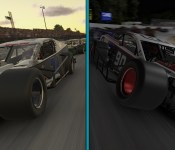
Double Trouble at Thompson as Stout Stays Steady and Benedict Breaks Through
Thompson, CT — The Red Light Racing Skitter Creek Modified Series stormed into Thompson Speedway Motorsports Park for one of the most anticipated nights of the season, a twin 50-lap doubleheader that promised chaos, opportunity, and a potential shake-up in the championship fight. By the end of the evening, the storylines delivered in full. One race became a family showcase, the other a survival sprint, and through it all, Eric “Teapot” Stout continued to keep a firm grip on the Season 15 title chase while Bill Benedict finally broke through with a signature win.
Race 1 opened with Patrick Stout on pole alongside Dalton Williamson, and it didn’t take long for the outside groove to establish itself as the dominant lane. Patrick immediately leveraged that momentum, holding strong against Williamson’s early pressure while the field behind them searched for grip and rhythm on the fast, unforgiving oval. The opening laps carried a sense of tension, with drivers carefully balancing aggression against the ever-present risk of losing control in the draft-heavy environment.
As the run developed, the race settled into a strategic battle broken up by timely cautions. Jeff Aho and Hayden Austin both flashed impressive speed inside the top five, while deeper in the field, drivers fought to maintain track position in a race where clean air and lane choice proved critical. Eric Stout, meanwhile, had to regroup after an early moment that nearly sent him onto the grass, a rare misstep that only seemed to sharpen his focus as he worked his way forward.
By the closing stages, the race had transformed into a Stout family showdown. Patrick and Eric ran nose-to-tail at the front, with Williamson lurking just behind, waiting for any opportunity to capitalize. A late green-white-checkered restart set the stage for a dramatic finish, forcing the brothers into a high-pressure duel. Patrick chose the outside lane and executed it flawlessly, using the preferred groove to maintain momentum and deny Eric any opening to the inside. When the checkered flag fell, it was Patrick Stout claiming the victory, with Hayden Austin securing a strong second-place finish and Eric Stout completing the podium. Chad Alcares came home fourth, while Dalton Williamson added another consistent result in fifth, continuing his season-long trend of staying firmly in the championship conversation.
If the first race was defined by control and execution, Race 2 flipped the script entirely. The top-11 invert reshuffled the order and dropped Devin Visnaw onto the pole with Bill Benedict to his outside, immediately injecting unpredictability into the grid. What followed was a race that unraveled almost as quickly as it began. A multi-car incident in the early laps swept up Patrick Stout and Brian Neff, eliminating one of the night’s biggest threats and forcing the field into early survival mode.
The chaos didn’t stop there. As drivers fought to regain position, another heavy crash involving Ethan “The Mountain” Troutman and Hayden Austin erased any hope of a clean run to the finish. The field was repeatedly tested, and each restart became a high-stakes gamble where one wrong move could end a driver’s night.
Amid the turmoil, Bill Benedict delivered the defining moment of the race. On a critical restart, he managed to do what few can at Thompson, launching from the inside lane and making the bottom groove stick through Turns 1 and 2. That single move gave him control of the race, and from that point forward, the pressure only intensified. Behind him, Josh Buckley, one of the most experienced drivers in the field, positioned himself for a late charge, waiting for the perfect moment to strike.
A late caution created exactly that opportunity, setting up a two-lap dash to the finish that had the intensity of a championship decider. Buckley threw everything at Benedict on the restart, diving into the corners and trying to force an opening, but Benedict remained composed under pressure. Holding a steady line and maximizing his exits, he denied every challenge and crossed the line to secure his first Virtual Grip Network broadcast victory, a breakthrough moment that had been building over several races.
Behind them, Devin Visnaw recovered from the early chaos to finish third, while Dalton Williamson once again showcased remarkable consistency with a fourth-place run. Luke Logan Allen rounded out the top five, adding another solid finish to his growing resume.
When the dust finally settled on the doubleheader, the championship picture remained both familiar and increasingly tense. Eric Stout, backed by his five earlier victories and a growing stockpile of bonus points, still controls the path to the title. However, the night at Thompson underscored just how deep the competition runs. Williamson continues to stack top finishes with relentless consistency, Buckley remains a constant late-race threat, and Benedict’s long-awaited breakthrough signals that new contenders are ready to disrupt the established order.
With momentum building and the margin for error shrinking, the Skitter Creek Modified Series now heads into its next round with the sense that every race from here on out could reshape the championship fight in an instant.
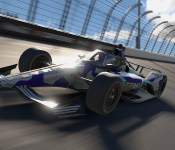
Matt Taylor Dominates Atlanta, Seizes Points Lead in Round 8
Atlanta, GA — The ISRA Sim Gaming Expo Open Wheel Series roared into the high banks of EchoPark Speedway for Round 8, where speed came easy but perfection did not. In a race shaped by early chaos and decisive pit strategy, Matt Taylor delivered a commanding performance, leading 74 of 110 laps to secure his second win of the season and vault into the championship lead.
Taylor launched from pole and immediately took control, but the opening laps cracked open like a thunderclap. On lap four, contact sent Richard Hearn into the wall, triggering a violent chain reaction. Brian Greenlee was sent airborne in a dramatic incident that brought the field to a halt, while Lewis Hayes was also collected. All three suffered terminal damage, their races ending almost as soon as they began.
Once the race found its rhythm, the strategic battle took center stage. Drivers split into two camps: those conserving fuel in the draft and those pushing hard for track position. Mark Murphy and Ryan O’Donoghue each spent time at the front, with O’Donoghue fearlessly working the outside groove, carving through the air with momentum on his side.
Taylor, however, remained the metronome. By the midpoint, he had stretched his advantage to over two seconds, placing the field in a constant state of pursuit. Lurking behind the lead group, two-time champion Kyle Klendworth once again played the long game, conserving early and positioning himself for a late charge.
That charge never came.
Green-flag pit stops rewrote the story in an instant. Klendworth, running inside the top five, was flagged for speeding on pit entry, a costly mistake that sent him tumbling two laps down. Mason Mitchum suffered the same fate, compounding the chaos of the cycle. For Klendworth, it was a championship-altering moment, transforming a potential podium into a recovery drive that ultimately netted a seventh-place finish.
With his closest rival neutralized, Taylor shifted from attack mode to control. Managing a commanding 10-second lead, he focused on precision over aggression, knowing the absence of a late caution meant the race was his to lose. Lap after lap, he clicked off consistent times, keeping the field firmly in his wake.
Murphy crossed the line in second after a steady run, later noting that cautious pit exits cost him valuable time in the fight for the win. David Sirois continued his strong form with a third-place finish, executing a clean three-stop strategy to secure another podium.
Further back, Alex Guyon added a solid top-five, while newcomer Tristan Forson impressed with a standout performance in the pack, signaling fresh talent emerging as the season builds toward its finale.
With the victory, Taylor now leads the championship standings by a narrow margin over Klendworth, the balance of power shifting at a critical moment in the season. Next, the series heads to the tight, unforgiving confines of Richmond Raceway, where the margin for error shrinks and the pressure only grows.
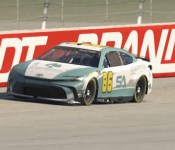
Skelton Gambles and Wins at Chicagoland Speedway in Midwest 150 Thriller
Joliet, IL — In a race shaped by razor-thin margins, daring pit calls, and a constant fight against dirty air, James Skelton rolled the strategy dice and came up golden, capturing his second win of the season in the Red Light Racing League Checkered Flag Auto Supply Scrambler Series Midwest 150 at Chicagoland Speedway. The Round 8 showdown featured a 17-car field tackling the challenges of tire wear on the mile-and-a-half oval, where clean air was king and patience paid dividends.
The race opened with Sean Single on the pole, choosing the outside lane, but early attention quickly shifted to Luke Logan Allen, the young standout who qualified second and wasted no time pressuring for the lead. Just 12 laps in, Allen’s night nearly unraveled while out front as his car snapped loose and began skating across the track. In a jaw-dropping save that had the broadcast buzzing, he kept the car off the wall and avoided triggering a multi-car incident, though the moment dropped him to the tail end of the field.
With Allen out of contention at the front, Maxime Theriault seized control and began to dictate the pace. Leading 37 laps, Theriault once again showcased the raw speed that has defined his season. As the run stretched on, drivers fought heavy aero push in traffic, constantly searching for clean air to keep their cars planted through the corners. The first green-flag pit cycle around lap 30 saw most of the field opt for four tires as wear mounted quickly on both sides. Conner Blasco capitalized during this sequence, jumping eight positions through efficient pit work to move himself into the top three.
The race ultimately turned on the final pit cycle near lap 60. While Theriault and the majority of the frontrunners committed to four fresh tires, Skelton made the bold call to take just two. The shorter stop, clocking in around 11 seconds, gave him a critical advantage of roughly four seconds over the field and vaulted him into the lead ahead of Theriault.
What followed was a tense closing run. Despite older tires, Skelton managed to maintain a steady gap of about a second, aided by a slight fuel advantage and the difficulty of making passes in turbulent air. Behind him, Zach Mitchell and Blasco battled fiercely for position, with Mitchell eventually securing third after a late-race pass. Further back, the playoff bubble fight intensified as Geoffrey Souza finished sixth, narrowly ahead of Adam Matz in seventh, gaining valuable breathing room in the standings.
At the front, Skelton remained composed, managing a car that grew increasingly loose as the laps wound down. Drawing on experience and familiarity with Chicagoland’s surface, he held off Theriault to take the checkered flag. Theriault settled for second after another strong showing, while Mitchell completed the podium. Trent Potter crossed the line fourth, with Blasco rounding out the top five.
Skelton later admitted the two-tire call was a gamble driven by circumstance, opting to take a chance in a season that had been anything but smooth. The risk paid off in full, delivering a statement win at a critical point in the schedule. With just two races remaining before the playoff field is locked, the Scrambler Series now hurtles toward its cutoff rounds, where every lap, every call, and every position will carry postseason weight.
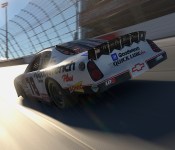
Nelson Tames the Lady in Black: A Green-Flag Masterclass at Darlington
Darlington, SC — The “Lady in Black” once again proved why she carries the reputation of being “Too Tough to Tame,” but Cortney Nelson made the challenge look almost graceful during Round 5 of the OBRL YesterYear Racing Cup Series at Darlington Raceway. In an extraordinary display of discipline and tire management, the 31-car field completed all 120 laps without a single caution, marking the second straight season the series has gone flag-to-checkered at the historic South Carolina oval.
From the pole position, Nelson wasted no time establishing control of the race. The No. 78 machine launched cleanly at the green flag and quickly settled into the high-speed rhythm that Darlington demands. With the abrasive surface chewing through tires lap after lap, drivers resisted the urge to attack early, instead slipping into single-file formation while carefully preserving their equipment. The Gen 4 cars, with their raw horsepower and twitchy balance on a hot track, made restraint essential. Too much throttle at the wrong moment could erase an entire stint’s worth of tire management in a single corner.
While the leaders maintained their rhythm, trouble struck behind them. Tom Ogle clipped the outside wall early in the event, bending the nose of his machine and forcing an unscheduled green-flag pit stop that effectively ended his chances of contending. The ripple effect caught points leader Dwayne “The General” McArthur in the aftermath, leaving him with right-front damage that compromised his aerodynamics and forced him to nurse the car for the remainder of the race.
As the laps ticked away, strategy became the central question. With a fuel window hovering around 60 laps, drivers faced a choice between committing to a conservative one-stop race or gambling on a two-stop strategy to take advantage of fresher tires late. A few teams, including Scott Negus, rolled the dice on the two-stop approach, hoping the extra grip would allow them to carve through the field during the closing run.
For the leaders, however, the race hinged on pit road execution. When the field began its green-flag stops around the halfway point, Nelson delivered one of the most critical moments of the night. His entry onto pit road was nearly perfect, gaining roughly 1.2 seconds over Eric Essary, the driver who appeared most capable of challenging him for the win. At a track where dirty air can act like a shield for the leader, that gap became a towering obstacle for the chasing pack.
Behind them, Matt Watkins spent much of the night climbing out of an early hole. Fresh off his dominant victory the previous week, Watkins admitted afterward that his team had misjudged the opening stint, burning through tires under the assumption that the race would require two stops. Forced to adapt on the fly, Watkins recalibrated his approach for the final 60 laps, transforming the No. 20 Bazooka machine into one of the fastest cars on the track during the closing stretch.
His charge came to life in the final laps. Watkins steadily erased a three-second deficit to Andrew Kotska, reeling him in corner by corner as the leaders navigated the worn Darlington grooves. With just two laps remaining, Watkins completed the pass to snatch the final podium position, salvaging a remarkable recovery after the early miscalculation.
Up front, however, Nelson never faltered. Essary gradually closed the distance and even reached the leader’s bumper on several occasions, but the turbulent air behind Nelson’s car made a clean pass nearly impossible without a mistake. The mistake never came. Lap after lap, Nelson threaded the needle through Darlington’s narrow corners, brushing close enough to the outside wall to flirt with the famous Darlington Stripe but never surrendering control.
When the checkered flag waved, Nelson crossed the line with calm authority, securing a hard-earned victory after 120 grueling green-flag laps. Essary followed home in second after his relentless but ultimately frustrated pursuit, while Watkins completed his comeback drive with a third-place finish. Only nine drivers remained on the lead lap at the finish, a reflection of the relentless pace the frontrunners maintained throughout the night.
With Darlington’s test of patience now behind them, the YesterYear Racing Cup Series shifts gears dramatically. The next stop sends the field to the tight, thunderous confines of Bristol Motor Speedway, where 200 laps on the “World’s Fastest Half-Mile” promise a very different kind of challenge. Tires may survive longer there, but tempers rarely do.
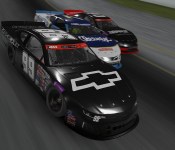
Lowe Strikes Again as Chaos at USA International Expands Championship Lead
Lakeland, FL — The championship pressure cooker tightened even further in Round 9 of the Bootleg Racing League Late Model Invitational Series as James Lowe captured his fifth victory of Season 33 at USA International Speedway. In a race filled with strategic tire battles, bruising contact, and a controversial late incident, the two-time defending champion emerged on top and extended his points lead over Ed Foster to six markers with just two races remaining.
The 18-driver field rolled onto the fast ¾-mile oval, a track featuring 14 degrees of banking and a new iRacing physics model that kept drivers guessing about grip and tire wear. Thanks to the series’ inverted grid format, Chris Davis started from pole while the championship contenders began deeper in the pack. Lowe lined up 11th, with Foster just ahead in 10th.
Early laps unfolded with unusual calm compared to the chaos often seen in short-track Late Model racing. Davis quickly asserted himself at the front, opening a small cushion while the real story developed in the midfield where the championship battle simmered. Both Lowe and Foster found themselves trapped in the outside lane early, fighting for track position. Foster initially held the advantage, but by lap 18 Lowe forced the issue, diving underneath Foster and pushing the Australian driver up the track to claim the position.
That pass signaled the beginning of Lowe’s steady climb toward the front.
As the race progressed past the one-third mark, the field shifted into tire management mode. Davis appeared to deliberately back down his pace, a strategy that allowed Benny Ellison to close the gap after later revealing he had corrected a flaw in his pedal settings before the race.
The calm was shattered on lap 46 when contact between Jeffery Hardin and Chris Worrell finally triggered the first caution of the night. The restart ignited a tense battle between Lowe and Ellison, with the two trading several heavy bumps in a spirited fight for position. Lowe later admitted he had to “stand up for himself” after feeling like he had been used as a brake earlier in the race. Another caution on lap 58 involving Brennan Myers froze the field with Lowe now sitting in third place, just ahead of a visibly frustrated Ellison.
The decisive moment arrived in the closing laps. With 14 circuits remaining, Lowe moved up to challenge Davis for the lead, attempting an ambitious high-side pass as the pair raced side-by-side through the corners. At the same moment, Worrell dove to the inside, creating a tense three-wide situation rarely seen in the series.
The move ended in disaster. Worrell lost control in the tight battle, and the resulting contact sent the long-time leader Davis hard into the wall. The incident immediately reshuffled the running order and handed Lowe control of the race setting up a dramatic three-lap sprint to the finish.
On the restart, Lowe controlled the field while Foster and Adam Schoen lurked behind. Foster opted for a conservative approach to protect his championship position, but Schoen charged aggressively from deep in the field. Starting 16th, Schoen made a stunning late push to grab second place, completing one of the night’s most impressive drives.
Out front, however, Lowe was untouchable. He crossed the line first to claim his third consecutive victory at USA International Speedway and his fifth win of the season. After the race, Lowe acknowledged the intensity of the battle that led to his victory. “It’s tight racing,” he said. “Once you get used as a brake too many times, you’ve got to kind of fight back a little bit.”
Schoen, who climbed 14 positions during the race, believed he might have had a shot at the win with a few more laps. “I think I had something for Lowe,” he said. “I just needed more than three laps.” Despite losing ground in the standings, Foster remained optimistic. “If we can keep him honest, I don’t think many people had me within ten points of the championship lead on their bingo card,” he said with a smile.
With only two races remaining, the Late Model Invitational Series now heads to Hickory Motor Speedway, where the championship battle between Lowe and Foster promises to reach a fever pitch.
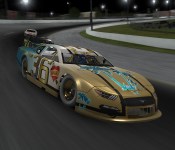
Hardin Dominates Attrition-Filled Night at USA International Speedway
Lakeland, FL — The Bootleg Racing League SteelCraft Structures Super Late Model Series produced one of its wildest races of the season in Round 9 at USA International Speedway, where Jeffery Hardin powered his #36 machine to victory after surviving an attrition-filled 100-lap battle. The win marked Hardin’s second triumph in the past three races and further cemented his place among the strongest challengers as the season begins to wind toward its conclusion.
The night erupted into chaos almost immediately after the green flag. As the field accelerated down the frontstretch to begin the race, a massive multi-car pileup broke out in what commentators described as a classic “concertina effect,” with cars stacking up and spinning as the tightly packed field had nowhere to go. Nearly half the grid was involved in the incident, dramatically reshaping the race before the opening lap had even fully settled. Among those caught in the wreck were several prominent contenders, including points leader James Lowe and Lewis Flowers. Both drivers sustained damage but were able to continue, while others were not so fortunate. Up front, polesitter John Wilson and Jeffery Hardin managed to thread their way through the carnage along with a handful of others, escaping with clean race cars and immediately gaining a major advantage.
The race remained unsettled through the early laps. On lap 12, the second caution appeared when Steve Hilbert and Kurt Smith spun after a bold three-wide move by Ed Foster squeezed the field exiting the corner. Just a few laps later, another yellow flag waved when Ruben Altice, running near the front, spun after making contact with Lowe while battling for position. The repeated cautions fractured the field and left several drivers already struggling with damage before the race had even reached the halfway point.
For Lowe, the evening became a test of perseverance. Already carrying damage from the opening wreck and the later incident with Altice, his night grew even more difficult when race control issued a black flag for a pit-road exit violation. The penalty forced Lowe to serve a green-flag stop-and-go, dropping him deep into the running order and leaving him with a significant deficit to overcome. Despite the setback, Lowe slowly worked his way forward during the long green-flag stretches that followed, clawing back positions with his typically measured approach and ultimately salvaging a seventh-place finish on a night that easily could have ended much worse for the championship leader.
While chaos unfolded behind him, Hardin steadily took control of the race at the front. After stalking Wilson in the early stages, Hardin eventually worked his way into the lead and began setting a consistent pace around the rubbered-up ¾-mile oval. Observers noted that Hardin appeared particularly comfortable on the track surface, possibly benefiting from a recent equipment upgrade that included a new set of racing pedals. Whatever the reason, his car remained stable and predictable as he navigated traffic and managed the race from the point.
The closing laps, however, brought a final surge of tension. Ed Foster, widely known in the paddock as the “Adelaide Blade,” began charging toward the front after recovering from earlier incidents. With careful tire management and an aggressive rhythm through the corners, Foster methodically reeled in the leader. What had once been a comfortable margin began shrinking rapidly as Foster cut a half-second advantage down to just two tenths in the final laps, applying intense pressure to Hardin’s rear bumper.
Lap after lap, Foster searched for an opening, but Hardin refused to give him one. Running a disciplined line along the inside groove, Hardin forced Foster to try the longer outside path if he wanted to attempt a pass. Foster threw everything he had at the leader, but a slight bobble with three laps remaining allowed Hardin to regain just enough breathing room to secure the victory.
Hardin crossed the finish line first, with Foster close behind in second after his impressive late charge. Mark Herzog quietly completed one of the strongest drives of the evening, climbing thirteen positions from his starting spot to finish third, while Adam Schoen and Todd Liston rounded out the top five.
In victory lane, Hardin credited his ability to remain composed during the chaotic race and the closing pressure from Foster, saying he focused on staying “calm and zen” even as the battle intensified. Foster, though disappointed to fall just short of his first win of the season, acknowledged the difficulty of passing a driver running a flawless defensive line. “He was running a perfect line,” Foster said afterward. “At that point it really requires the other guy to make some sort of mistake.”
With Round 9 now complete, the SteelCraft Structures Super Late Model Series shifts its attention to the legendary short track at Hickory Motor Speedway, where the field will attempt to survive another demanding bullring and continue building momentum toward the final races of Season 26.
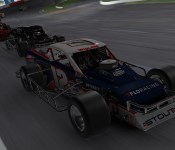
Teapot Survives the Hickory Wreckfest to Score Fifth Win
Hickory, NC — Round 8 of the Red Light Racing Skitter Creek Modified Series at Hickory Motor Speedway turned into a wild test of patience, survival, and strategy, but when the dust settled Eric “Teapot” Stout once again stood in victory lane. Navigating pit road drama, heavy traffic, and a chaotic final lap crash, the defending three-time champion captured his fifth win of the season in the 100-lap battle at the track known as the “Birthplace of the NASCAR Stars.”
Entering the night, the spotlight was squarely on the championship fight between Stout and Dalton Williamson. The gap between them sat at 13 points, a number made more intriguing by the fact that it matched the exact amount of bonus points Stout had accumulated so far this season. With 22 drivers in the field and no fast repairs available, the notoriously bumpy 3/8-mile bullring promised to punish even the smallest mistake.
Qualifying placed teammates Eric Stout and AJ Hamel on the front row, with Ethan “The Mountain” Troutman and Williamson starting close behind in row two. When the green flag waved, Stout used the outside groove to build early momentum and clear Hamel for the lead as the field settled into a tight single-file rhythm. Williamson quickly emerged as the early aggressor, applying constant pressure to Hamel’s rear bumper while searching for a way around the second-place car. Deeper in the pack, Brian Bianchi quietly became one of the race’s biggest movers, climbing eight positions after a difficult qualifying run.
The race’s turning point arrived around lap 60 when Williamson’s patience finally wore thin. Leaning on the “chrome horn,” he nudged Hamel entering the corner, sending the front-row starter into a half-spin and opening the door for Williamson to grab second place. Soon after, a caution triggered by contact between Bill Benedict and Brian Neff brought the field to pit road. What should have been a routine stop for the race leader turned into a surprising setback for Stout, whose pit stop stretched close to 14 seconds, possibly due to a fueling error. Williamson beat him off pit road and appeared to have seized the advantage, though both drivers restarted behind Hamel and Chris Haizlip, who had gambled by staying out on older tires.
Fresh rubber quickly changed the equation once racing resumed. Stout aggressively worked his way forward and made his decisive move with 22 laps remaining, giving Williamson a firm bump exiting Turn 4 that stalled his momentum just long enough for Stout to dive inside and reclaim the lead. From there, the champion had to thread his way through heavy lap traffic, including a surprisingly fast Louis Flowers running several laps down on fresher tires.
A late caution involving Benedict erased Stout’s cushion and set up one final restart that would decide the race. Choosing the inside lane, Stout launched cleanly and held Williamson at bay as the leaders took the white flag. What happened next turned the finish into pure chaos. As the front-runners crossed the start-finish line on the final lap, a massive multi-car crash erupted directly ahead of them. Cars scattered across the racing surface, but Stout managed to power through the carnage to secure the victory, while Williamson crossed the line second for the fourth time this season.
Bradley Stefane completed the podium in third after executing an impressive sideways save through the final corners to avoid the wreck, keeping his car intact as the chaos unfolded around him.
After the race, Stout joked that his biggest challenge might have been his own pit crew, admitting confusion over the nearly 14-second stop that briefly cost him the lead. Williamson, despite another runner-up finish, pointed to his remarkable consistency as the only driver to record a top-five finish in every race so far this season, noting he still needs to find a bit more speed over long runs and in qualifying. Stefane described his podium as something of an “under-the-radar” result, crediting both a strong car and a fair share of luck.
With another dramatic chapter complete, the Skitter Creek Modified Series now heads to Thompson Speedway for a high-stakes Twin 50-lap showdown that will feature a field invert and the potential for even more unpredictability in the Season 15 championship fight.
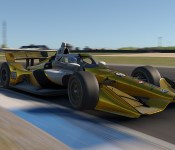
Sirois Triumphs at Phillip Island in Tactical Open Wheel Thriller
Phillip Island, Victoria — Round 7 of the ISRA Sim Gaming Expo Open Wheel Series delivered a strategic chess match at the sweeping coastal curves of Phillip Island Circuit, where tire choices, recovery drives, and mid-race chaos reshaped the running order. When the checkered flag finally waved, David Sirois emerged on top after turning an early setback into a perfectly timed victory.
The race began with Alex Guyon leading the field to green from pole alongside Matt Taylor. The opening laps were aggressive and tightly contested, with Sirois quickly inserting himself into the fight for second. That early duel came to an abrupt halt at Turn 4 when the leaders encountered a spinning car. Guyon lost control and looped the car, collecting both Sirois and Taylor in the unfolding chaos.
As the front-runners scrambled to recover, Richard Hearn slipped through the smoke and debris to inherit the lead. Running a nostalgic 1996-era IndyCar paint scheme, Hearn briefly looked poised to steal the race outright. However, the evasive maneuver left his car with front wing damage, forcing a lengthy 10-second pit stop later that would complicate his strategy.
The defining element of the race soon became tire management. Drivers were required to use both compounds available for the Dallara IR-18. The red-sidewall alternate tires offered tremendous grip but degraded rapidly, often lasting only four to seven laps before performance dropped dramatically. The black primary tires were slower initially but could maintain consistent pace for long stretches of up to 25 laps.
Sirois started on the red alternates and quickly discovered their downside. As grip vanished, the car became increasingly loose, forcing him into an early stop to switch to the black primaries. That decision quietly positioned him for the long game, allowing him to climb back through the field once the race stabilized.
Further down the order, Hugo Galaz attempted one of the boldest strategies of the night, stretching a one-stop plan as far as possible in hopes of stealing a podium. For much of the closing phase it looked plausible, but the gamble unraveled on the final lap when he ran out of fuel and had to dive for pit lane, tumbling down the order.
Meanwhile, Rodrigo Munoz produced one of the drives of the race. After running wide at the Southern Loop on the opening lap and losing multiple positions, he steadily rebuilt his race through careful pace and smart use of push-to-pass. By the final stint he had climbed back into contention, ultimately securing a strong third-place finish after chasing Hearn in the closing laps.
The final phase centered on whether Hearn could defend the lead. Staying out on aging black tires as long as possible, he hoped to maintain track position before making a late switch back to the faster red alternates. When he finally pitted with roughly five laps remaining, he returned to the circuit with fresh grip and a full reserve of push-to-pass time.
It wasn’t enough.
Sirois, already charging on fresher tires, had built a gap too large to erase. Hearn’s late push narrowed the margin slightly, but the leader remained composed through the fast, flowing corners of Phillip Island and crossed the finish line comfortably ahead.
Behind them, Guyon and Taylor salvaged solid finishes after their early incident. Ryan O’Donoghue endured one of the most eventful races of the night, recording an astonishing 25 off-track incidents while trying to keep his car pointed in the right direction around the demanding circuit.
Championship leader Kyle Klendworth had a rare difficult outing. After missing the initial grid, he joined the race laps down and struggled with multiple spins in the grass and gravel beyond the racing surface.
Another dramatic moment came at the finish when Christopher Ragan edged Galaz in a photo finish for sixth place by just three hundredths of a second as Galaz limped toward pit lane out of fuel.
By the end of the night, it was Sirois who stood tallest, transforming early adversity into a strategic victory on one of the fastest road circuits on the schedule. With Round 7 complete, the championship story continues to twist as the series prepares for its next stop on the ISRA calendar.
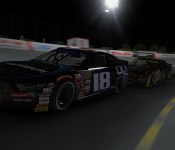
Potter Charges from 10th to Victory at Lanier
Braselton, Georgia — Trent Potter carved his way through the field and into victory lane in Round 7 of the Virtual Grip Network’s Red Light Racing Checkered Flag Auto Supply Scrambler Series, charging from 10th on the grid to claim a gritty win at Lanier National Speedway on March 9, 2026. In a 150-lap short-track showdown packed with cautions, strategy calls, and playoff implications, Potter’s patience and a perfectly timed two-tire gamble proved enough to overcome a dominant performance by pole-sitter Chris Hammett.
The night opened with intense pressure surrounding the playoff cutoff line. With only three races remaining before the postseason, the spotlight centered on the fight for the 12th and final playoff position. Geoffrey Souza entered the race 13th in points, just one point behind Tony Strano, who was absent from the event. Souza made an immediate statement by qualifying second on the front row, while fellow bubble contender Bill Benedict rolled off 11th. Hammett captured the pole with a strong qualifying effort and quickly established himself as the early favorite.
Chaos struck almost immediately when Souza tangled with Bruce Potter on the opening lap, sending Souza to the back of the field with damage that derailed his playoff hopes for the evening. The incident proved costly, as Souza eventually limped home 15th, four laps down, surrendering valuable ground in the standings battle.
Out front, Hammett controlled the race, leading the opening 101 laps while the rest of the field formed a tight mid-pack freight train. One of the race’s most entertaining duels developed for fifth place between Adam Matz and Sean Single, who ran side-by-side for dozens of laps in a grinding battle that chewed through tires and bottled up the pack behind them.
The race’s rhythm shifted repeatedly through a series of cautions. A key moment came on lap 47 when James Skelton and Maxime Theriault made contact while battling for position, spinning Skelton and triggering another yellow flag. During the caution cycle, Benedict, Kenny Allen, and Jason Wells stayed out in hopes of gaining valuable track position. Allen attempted an especially bold strategy, remaining on worn tires twice in an effort to trap competitors a lap down. The gamble ultimately backfired as his pace faded on the restart, forcing a pit stop that left him finishing 13th.
The decisive moment came during the final round of pit stops. Potter elected to take just two tires, a move he later admitted made the car more responsive in the corners even if it made the throttle feel “touchy.” The call proved brilliant, allowing him to leap ahead of Hammett, who opted for four tires but struggled to regain the track position he had lost.
A late caution involving Skelton and Single set the stage for a tense sprint to the finish. When the green flag waved again, Hammett pressed hard on Potter’s rear bumper, even delivering a few “love taps” on the final lap in an attempt to unsettle the No. 18 machine. Potter held his line on the bottom groove and powered off the corner cleanly, sealing his second win of the season.
Potter’s victory lane celebration capped an impressive drive through the field, while Hammett settled for second despite leading the majority of the race. Theriault completed the podium in third, with Single finishing fourth and Luke Logan Allen rounding out the top five. In the crucial playoff bubble fight, Benedict’s seventh-place finish allowed him to extend his advantage over Souza heading toward the final stretch of the regular season.
After the race, Potter admitted the closing laps had him on edge, unsure how his two-tire strategy would hold up once the tires cooled. “I was pretty worried there,” he said, “because I didn’t think it was going to drive as good once they cooled off a little bit, but thankfully that was all it was.” Hammett, reflecting on his runner-up finish after leading 101 laps, took the result in stride, noting that hindsight suggested two tires might have been the better call before joking that Potter handled the final-lap contact well. He also revealed he will miss the next race while vacationing in the Bahamas.
With Lanier now complete, the Scrambler Series pushes closer to the postseason cutoff as drivers prepare for the final rounds of the regular season and the playoff grid begins to take shape.




 Virtual Grip Network