Lowe Delivers Late-Race Masterclass at Myrtle Beach
Shifting from the sweeping high banks of Five Flags Speedway to the flat, treacherous asphalt of Myrtle Beach Speedway, Round 4 of the Bootleg Racing League Late Model Invitational Series delivered a masterclass in chassis control and tire management on Saturday night, October 21. Stripped of the banking that drivers relied on two weeks prior, Myrtle Beach forced teams to hunt for pure mechanical grip around a single-groove bottom arc. The track’s defining perimeter hazard—the notorious, stationary concrete “turtles” guarding the inside of turn two—threatened to violently unsettle any chassis that clipped them too aggressively, leaving zero margin for error over a long green-flag run.
Grid mechanics once again reshaped the field under the league’s signature 13-car inversion rule, rewarding Round 3 pole-sitter Tom Hilbert with another front-row start alongside sim racing veteran Donnie Moore. Starting near the back was championship leader James Lowe in twelfth, positioned alongside his primary title rival Michael Goodman in eleventh, whom Lowe held a tight seven-point championship lead over coming into the evening.
Front-row momentum initially favored pole-sitter Tom Hilbert, who launched off turn four to lead the opening lap with clear track ahead. That advantage vanished instantly on lap two when Luke Logan Allen mounted a furious charge on the outside groove, sweeping past Hilbert to assume the point. Hilbert’s car immediately slid loose off the corner, breaking his momentum and leaving him helpless on the high side. In rapid succession, Moore, Chris Haizlip, and Steve Hilbert freight-trained past the struggling pole-sitter, sending him tumbling down the running order as he searched for bottom-groove grip.
Patience paid dividends for veteran Donnie Moore as Allen’s machine began to handle tight midway through the opening stint. Sensing the leader’s mid-corner push, Moore maneuvered his entry, diving beneath Allen off turn two to seize the lead. Meanwhile, championship leader James Lowe and Todd Liston were staging a masterclass in traffic navigation further back. Slicing through tight, single-file quarters past Ruben Altice and Joseph Snyder, both drivers picked up five positions in rapid order.
Pressure boiled over in the battle for third place as a four-car freight train featuring Chris Haizlip, Joseph Snyder, Ruben Altice, and James Lowe ran nose-to-tail. The tense standoff was shattered by the night’s first caution flag when Kurt Smith checked up slightly entering turn one, triggering contact with John Wilson that sent Charles Roth and Michael Goodman spinning in a chain reaction. The stoppage dealt a devastating blow to Goodman’s title hopes when race officials assessed him a black flag penalty for a green-flag restarting infraction. Forced to serve a pass-through penalty under green, Goodman dropped off the lead pace temporarily, facing a steep uphill battle to rescue his championship night.
Tactical double-file restart execution redefined the race at the front as Luke Logan Allen brought the field back to green with James Lowe lurking in fourth position. Lowe instantly dispatched Moore for second before zeroing in on Allen’s rear bumper for an intense wheel-to-wheel showdown. Driving deep into turn three, Lowe set up his attack perfectly, executing a flawless crossover maneuver off the bottom corner exit of turn four to slide beneath Allen and take the lead. Once out front, Lowe locked into his pre-calculated target lap time established during practice, refusing to push his equipment any harder than necessary whether holding a four-second gap or a half-second margin.
Mid-pack traffic erupted in a second multi-car pileup late in the going when Kurt Smith checked up roughly half a lane high entering turn one. Behind him, contact between Darryl Wineinger and Joseph Snyder sent Snyder careening into Wilson and Smith, leaving multiple machines sideways in a dense cloud of tire smoke across turns one and two. Navigating the blind chaos, Chris Haizlip relied on his cow catcher front bumper to nudge through the spinning wreckage, escaping heavy damage to emerge clean on the other side.
Slicing through fresh grip on the final restart, Darryl Wineinger launched an astonishing charge through the order. Despite having been brought to a complete stop on the track twice during earlier incidents, Wineinger picked off Steve Hilbert, Kurt Smith, Jeff Sharp, and Todd Liston in consecutive laps. In stark contrast, Ruben Altice suffered a complete handling breakdown as his right-front carcass gave out entirely. Running on the rims with no steering response, “The Quiet Man” faded rapidly over the final five laps as a line of cars bypassed his tight line. Further back, Michael Goodman completed a remarkable recovery drive, carving through late-stage traffic to claw his way all the way back into fifth position.
Cruising across the stripe completely uncontested, James Lowe checked away over the closing laps to claim his second victory in three races, reinforcing his championship lead. Luke Logan Allen crossed the line in second place, while Darryl Wineinger finalized his heroic drive from the rear to secure third and hard charger honors. Donnie Moore held on for fourth, while Michael Goodman completed his sensational comeback from the black flag penalty to finish fifth. James Lowe attributed his dominant run to rigid pace discipline, explaining that establishing a baseline lap time in practice and sticking to it religiously preserved his tires through traffic.
Poe Edges Stout in SK Thriller as Williamson Rules Tour Mods
The Red Light Racing League returned to action for a grueling doubleheader featuring Rounds 9 and 10 of the Skitter Creek Modified Series Season 16, broadcast live from Concord Speedway. Concord Speedway presented a formidable technical test for the field with its unique, high-friction, three-turn layout defined by its notorious backstretch dog-leg. In open-wheel modified machinery, this irregular geometry functions as a full-fledged corner, generating intense contact zones and punishingly tight entry angles where contrasting driving lines frequently intersect. To excel around Concord, competitors had to navigate twin 60-lap feature races requiring rapid adaptation across two distinct vehicle classes, transitioning from the grounded, momentum-driven SK Modifieds in Round 9 to the twitchy, higher-horsepower Tour Modifieds in Round 10. The doubleheader arrived at a crucial juncture in the championship hunt. Points leader James Lowe entered the evening holding a 69-point advantage over former champion Luke Logan Allen following Dalton Williamson’s dominant, 100-lap flag-to-flag victory at Oxford Plains the week prior. Meanwhile, a ferocious battle raged behind them, where a mere ten points separated third through sixth in the standings—occupied by Kenny Allen, Eric Stout, and Ethan Troutman—setting the stage for a high-stakes night in the Tar Heel State.
Round 9 commenced with five-time series champion Dalton Williamson securing the pole position alongside front-row partner Eric Stout, while championship leader James Lowe lined up fifth. As the green flag dropped, drivers immediately wrestled cold tires through the tricky backstretch dog-leg, where unpredictable grip levels provoked early multi-car incidents that ensnared Fred LeClair, Kevin Alicea, and Chris Haizlip. Mid-race contact further disrupted the running order when a sudden accordion check-up caught up James Lowe and Glenn Jamieson, sending Lowe spinning and forcing the points leader to mount a recovery drive from fourteenth position. Out front, Eric Stout demonstrated tactical patience, executing a decisive mid-race pass on Williamson through the backstretch dog-leg by finding a superior entry angle through Turn 2 that allowed him to dive underneath “the Sheriff.” Behind them, Mark Poe systematically charged forward from his fourth starting spot, picking off competitors with surgical precision to put himself directly into podium contention as the pay window opened in the closing laps.
The closing stages of Round 9 delivered an electrifying climax punctuated by a late green-white-checkered restart. As the field accelerated out of Turn 4 for the final green flag, third-place Dalton Williamson delivered a crucial bumper shove to Mark Poe, launching Poe’s car momentum into the high line alongside Stout. Poe and Stout engaged in a door-slamming, nerf-bar-rubbing drag race through the final two corners, neither driver yielding an inch of track position. In the closest finish of Season 16, Poe held his line off Turn 4 and edged Stout by a fraction of a second at the line to claim his first career Red Light Racing series victory, leaving him almost speechless post-race after wrapping on the chamber door for so long. Stout settled for a tight second-place finish, acknowledging post-race that his tires had grown severe tight late in the run while noting his strategic focus on chipping away at Lowe’s points cushion. Williamson completed the podium in third, while Lowe executed a masterful drive back through traffic to recover to eighth place, minimizing potential damage to his championship lead.
The narrative transitioned seamlessly into Round 10 as drivers stepped up to the higher-horsepower Tour Modifieds, a vehicle transition that radically altered the track dynamics. Unlike the grounded SK Modifieds, the Tour Modifieds feature a twitchy rear end that demands drivers pedal the throttle carefully on cold tires. Furthermore, these machines suffer from severe tight-entry push conditions around Concord, forcing drivers to back up corner entry significantly to avoid pushing wide into the unforgiving concrete walls or snapping loose on exit acceleration. Williamson continued his qualifying mastery by claiming his second pole award of the night alongside Stout. Early multi-car cautions involving Marlo Stoutman, Alex Sullivan, and Poe prompted race administrators to enforce the league’s opening-lap contingency rule: because a caution occurred within the first five laps, all subsequent restarts reverted to single-file for the remainder of the session to foster clean green-flag racing. The tricky layout continued to claim victims under green, notably when Jeff Aho touched the lower apron with his left-side tires through the dog-leg, instantly de-wedging his chassis and snapping his car loose into a spin. Shortly after, hard contact with Concord’s concrete wall instantly snapped Fred LeClair’s right-front suspension—knocking concrete debris onto the track and abruptly ending his night under the league’s strict no-fast-repair rule.
Once single-file restart administration was established, Dalton Williamson put on a absolute wire-to-wire clinic. Managing his throttle application flawlessly out of Turn 3, Williamson led all 60 laps from green flag to checkered flag without surrendering the lead, completing a rare two-race streak of flag-to-flag dominance following his Oxford Plains victory. Eric Stout navigated each restart cleanly to secure his second runner-up finish of the doubleheader, reinforcing his mid-season points surge. Behind them, James Lowe executed a pragmatic and calculated drive through the single-file field to capture a solid third-place finish. In post-race interviews, Lowe admitted that Concord’s wide-bodied modifieds made late-race “bonsai moves” far too risky on entry, leading him to settle for third and bank valuable championship points. Brian Neff delivered a standout drive to take fourth, while Ethan Troutman crossed the line fifth to cap off a resilient night.
The Concord Speedway doubleheader provided a compelling showcase of virtual racing dynamics, contrasting a hair-raising side-by-side photo finish in the SK Modifieds with a masterclass in wire-to-wire dominance in the Tour Modifieds. Competitors across the field—including Mark Poe, Eric Stout, Dalton Williamson, James Lowe, Kenny Allen, Ethan Troutman, Brian Neff, Marlo Stoutman, Luke Logan Allen, Bradley Stefane, and Rex Hoyle—navigated a night defined by high-friction racing, setup adjustments, and intense physical battles. As the Red Light Racing Skitter Creek Modified Series prepares to head to Lanier National Speedway for a 100-lap SK Modified showcase next week, Stout’s double-podium performance and Lowe’s calculated damage control keep the Season 16 championship chase tensely poised.
Matheson Outlasts Okrzesik as Hawkins Claims ISRA Points Lead at Homestead
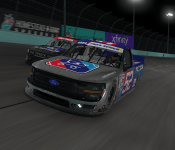
Under the floodlights at Homestead Miami Speedway, twenty-four trucks lined up for 125 laps of relentless action in Round 2 of the ISRA Tuned-Up Truck Series presented by Sim Gaming Expo. Pole-sitter Connor Okrzesik set the qualifying benchmark, driving his No. 41 Toyota to a blistering fast lap of 32.791 seconds. Deep in the field, eventual winner Jake Matheson faced a daunting climb from 18th starting position. The tuned-up spec trucks in this series feature a 5% to 10% horsepower boost over standard iRacing NASCAR Craftsman Trucks, allowing drivers to launch off Homestead’s apron and bottom groove with significantly more drive, though managing that additional grunt on cold Goodyear tires proved instantly hazardous.
When the green flag waved, the inherent volatility of cold virtual rubber on Homestead’s progressive banking manifested immediately. Entering Turn 3 on Lap 1, Chris Stofer clipped the apron while fighting for grip, triggering a multi-truck slide that swept up Matt Wagner and Sam Crowe as drivers wrestled with tires that felt like skating on ice. The early yellow allowed Hawkins to snatch the lead from Okrzesik before a single green lap was completed. On the Lap 5 restart, Matheson initiated a furious charge from 18th, methodically carving his way into the top ten within a handful of circuits. Up front, Hawkins established early control while an intense battle erupted among O’Donoghue, Brewer, Hund, and Matt Taylor. Homestead’s progressive banking presented a stark mechanical trade-off: sweeping high against the outside wall—the line popularized by Kyle Larson—carried immense momentum down the straightaways, but the high-friction surface severely cooked right-front tires. Conversely, wrapping the bottom yellow line sacrificed short-run momentum but saved right-front rubber and critical fuel, setting up an early strategic divide across the field.
The middle stint evolved into a complex strategic chess match punctuated by middle cautions. Caution 2 flew when Colby Pierce lost control and slapped the outside wall. Later, Caution 3 was triggered near Lap 49 following contact between Justin Kirby and Craig Forsythe. This yellow opened a crucial strategy split. Drivers like Kendale Paul, Tony Blake Brewer, and Austin Hund committed to a two-stop strategy by pitting around Lap 49/50. Meanwhile, Okrzesik, Matheson, Chris Stofer, and Michael Goodman gambled by staying out on older tires to gain track position. The tire advantage quickly revealed itself; Hawkins, having taken fresh Goodyear rubber, sliced back through traffic to reclaim the lead on Lap 58 ahead of Paul, Lionel Calisto, Matt Taylor, Chris Ragan, and Kirby.
Around Lap 74, a single-truck spin by Colby Pierce brought out Caution 4, plunging the race into a high-stakes fuel management crisis. While top runners including Okrzesik, Matheson, and Hawkins dove onto pit road for their final tire and fuel service, drivers like Hund and Paul temporarily stayed out. When the race restarted on Lap 78, Okrzesik, Richie Hearn, Ragan, and Matt Taylor stormed back toward the front. However, the mathematical reality facing the lead pack was brutal: with fuel range estimated at 65 to 68 laps, drivers who serviced their trucks on Lap 74 or 75 were forced into aggressive fuel-saving mode—clutching into corner entries and modulating the throttle—to stretch their final tank 50 to 51 laps to the checkered flag. Pitting under green at Homestead is devastating due to the circuit’s long, low-speed 55 mph pit lane entry off Turn 4, which costs drivers roughly two full laps on track. That unforgiving pit delta ultimately wiped out the winning hopes of green-flag pitters like Jim Herrick, Brewer, Paul, and Goodman.
Over the final stint, a dramatic, silent chess match unfolded between pole-sitter Okrzesik and Matheson. Sensing his thin fuel margin, Hawkins backed off his pace to preserve his cell, dropping to 3rd. Matheson, wrapping the bottom yellow line to save both fuel and right-front rubber, erased a one-second gap to Okrzesik with 12 laps remaining. Okrzesik had utilized his extra horsepower to build an early gap, but he later admitted in post-race interviews that pushing mid-stint to keep Hawkins at bay burned up his rear tires. Over the final ten laps, Matheson and Okrzesik traded the lead in a masterclass of clean sim-racing craft. On the final lap, Okrzesik dove deep into Turn 1 to secure the inside groove, but Matheson executed a flawless momentum crossover off Turn 2. Coming off Turn 3, Okrzesik suffered a slight rear-end wiggle on his worn tires, opening the door for Matheson to power off Turn 4 and secure a remarkable victory by a fraction of a second. Matheson crossed the line having saved roughly a full gallon by wrapping the bottom line, leaving him with 0.7 to 0.8 gallons at the checkered flag.
At the checkered flag, Jake Matheson completed his drive from 18th to victory lane, followed by Connor Okrzesik in 2nd and Vern Hawkins in 3rd. Capitalizing on his strong podium finish after building on his front-running performance from Round 1 at Kentucky Speedway—where he led 33 laps—Vern Hawkins officially assumed the ISRA Tuned-Up Truck Series overall championship points lead ahead of Matt Taylor as the series prepares for Round 3 at Richmond Raceway.
Patience, Pit Strategy, and Power: Ogle Outsmarts Field in 150-Lap Grind
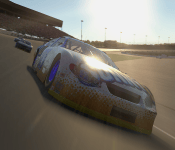
Atlanta Motor Speedway presented an uncompromising, high-speed crucible for Round 32 of the OBRL YesterYear Racing Cup Series Season 9, inviting high-horsepower NASCAR Gen 4 machines to tackle 150 laps around its notoriously coarse asphalt. Generating over 800 unrestricted horsepower and reaching top speeds exceeding 197 miles per hour, these cars tested driver precision against extreme Goodyear tire degradation. Pole-sitter Tom Ogle led the 25-car field to the green flag alongside front-row partner Lloyd Moore. When the pace car veered onto pit road, Sean Foltz launched an aggressive opening-lap charge from his third starting spot, diving beneath Ogle through Turns 1 and 2 to seize the early lead.
The abrasive surface immediately dictated the terms of engagement, forcing drivers to delicately feather the throttle out of the corners to avoid burning off their right-rear tires while rolling the chassis to relieve right-front loading. Lap times plummeted drastically; within just seven laps under green, tires experienced falloff of half a second per lap, with drivers describing the sudden loss of grip as being like flipping a switch. Seeking a seasonal sweep at the track, Matt Watkins carved through the lead pack to set the fastest lap of the race at 30.331 seconds while battling Foltz for top position. Farther back, Clay Walker initiated a methodical charge from the 25th starting spot at the rear of the grid, conserving his rubber and riding the bottom white line to slice through mid-pack traffic. Meanwhile, Cortney Nelson—who entered the night third in the championship standings—suffered immediate catastrophic delays, missing the initial grid start and entering the circuit multiple laps down in a severely ill-handling #3 machine that repeatedly scraped the outer concrete retaining wall.
The event’s strategy unfolded across two distinct green-flag pit stop windows, highlighted by the treacherous transition from Atlanta’s high-banked turns to its flat, unbanked pit entry. During the initial green-flag cycle around Lap 50, Matt Watkins entered pit road too fast, sliding sideways across the flat apron and earning a crushing stop-and-hold penalty that decimated his winning hopes and dropped him off the lead lap. Bobby Goetz executed a clean stop to emerge as the surprise race leader ahead of Ogle. Settling into a groove, Ogle systematically stalked Gats before making a decisive on-track pass on Lap 67 to reclaim the point. The second green-flag pit cycle between Laps 100 and 110 provided Ogle’s true strategic masterclass. While competitors ducked onto pit road early, Ogle executed an overcut strategy by staying out extra laps on worn rubber, then nailed a flawless pit entry and a rapid 15.6-second service. When the cycle fully cleared, Ogle’s overcut netted him an insurmountable eight-plus-second cushion over the field, while Cortney Nelson’s night continued to unravel under a sequence of pit-entry black flags for speeding.
As the race entered its final 40-lap stretch, Ogle put on a masterclass in tire preservation, maintaining smooth steering inputs to eliminate straightaway chatter caused by dirty air. Behind the leader, chaotic incidents altered the order. Scott Negus spun attempting to negotiate the flat pit entry, while front-runner Bobby Goetz suffered a late-race spin in Turn 1 that entangling Torrence Childs and Lloyd Moore, forcing Moore to limp to pit road on three tires. Sean Foltz found himself locked in a fierce podium battle with Eric Essary for second place. As the track rubbered up, Foltz resorted to defensive mirror driving to hold his ground, while Essary manipulated his corner entry lines to cool down his Goodyears before mounting secondary attacks. Behind them, points leader Dwayne McArthur drove a steady, risk-averse race in fourth, while Clay Walker capped off a late-run passing clinic by picking off drivers who had abused their equipment early, bringing his #2 machine from 25th to 5th. A late-race spin for Cortney Nelson on Lap 130 ultimately brought an end to his disastrous evening via an official black-flag disqualification.
At the end of 150 grueling laps, Tom Ogle crossed the finish line to take the checkered flag, completing a dominant performance with a commanding 10.5-second margin of victory over Shawn Foltz in 2nd, Eric Essary in 3rd. Ogle’s synthesis of setup discipline, tire conservation, and overcut strategy delivered an unchallenged victory. By avoiding the pitfalls that struck his closest rivals, McArthur expanded his championship lead to 41 points over Watkins. With only three races remaining in Season 9, the title race has narrowed significantly: Dwayne McArthur, Matt Watkins, Tom Ogle, and Eric Essary stand as the only four drivers mathematically eligible for the championship, while Cortney Nelson and Greg McDaniel were officially eliminated from title contention.
Lowe Dominates Five Flags in Round 3 with the Bootleg Racing League
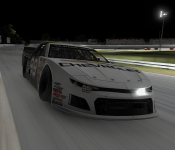
Round 3 of the Bootleg Racing League Late Model Invitational Series Season 36 brought competitors to Five Flags Speedway for a grueling 100-lap feature event that put technical discipline to the ultimate test. Renowned across asphalt short-track racing as a premier tire-eating facility, Five Flags presents a punishingly abrasive surface where managing right-front tire wear dictates the outcome. Strategic stakes were heightened by standard BRL regulations, which strictly prohibit pit stops for fresh rubber under the mandate that drivers must finish with the same set of tires that brought them to the green flag. This absolute rule established a stark strategic division between impatient early chargers willing to burn through their equipment for track position and disciplined strategists focused on long-run rubber conservation.
Pole-sitter Tom Hilbert capitalized on his front-row starting spot at the drop of the green flag, launching into an immediate lead. In contrast, his brother Steve Hilbert struggled on the high line of row one, quickly losing ground to Mike Holloway, Kurt Smith, and championship contender Michael Goodman. Out front, Tom Hilbert set a blistering early tempo, opening up a gap of nearly two seconds and controlling the race for the first 30 laps. However, his relentless pace exacted a severe tire-wear penalty that would return to haunt him. Behind him, Luke Logan Allen executed an explosive charge from 14th on the grid, aggressively picking off competitors line by line to surge into 2nd place within the first third of the race. While Allen’s high-risk charge provided thrilling early theater, it was also burning through his right-front tire on Pensacola’s abrasive surface leaving his car severely compromised late in the feature.
Meanwhile, points leader James Lowe executed a masterclass in patient strategy from his 9th-place starting position on the favorable inside line. Lowe remained focused on a disciplined target lap time in the low 17-second range—the ideal rhythm for preserving the right-front tire over a continuous 100-lap run. Allowing the early chargers to exhaust their equipment, Lowe methodically worked his way forward. He past Luke Logan Allen as Allen’s early surge stalled, then closed the gap on Tom Hilbert, whose right-front tire was rapidly fading. Executing a clean pass between laps 30 and 33, Lowe took command of the race at the point.
Once out front, James Lowe established complete control over the final 70 laps, maintaining an unbroken, smooth pace. Behind him, the physical reality of tire degradation began to tear through the field, catalyzed by the race’s first major caution when Chris Haizlip and Matt Hoose made contact at the entry of Turn 1. The resulting restart ruthlessly exposed drivers who had depleted their tires early. Tom Hilbert faded rapidly like a rolling chicane on worn rubber, while frantic mid-pack battles erupted behind him. Todd Liston attempted to make moves on the outside line but became trapped in a desperate three-wide situation alongside Joseph Snyder and Mike Holloway, culminating in Holloway making heavy contact with the inside wall after getting squeezed in the middle.
Long green-flag stretches ultimately rewarded drivers who had hoarded their tire wear during the opening stages, setting up late-race dramatics among the survivors. Joseph Snyder mounted a brave run on the outside line of row one during a late restart, battling two-wide for position before getting loose, clipping the apron, and eventually nosing his car into the inside wall, ending his podium hopes and relegating him to an 8th-place finish. Meanwhile, Matt Hoose—who had started dead last in 15th position after arriving late to the event—capitalized on his remarkably preserved rubber. Hoose sliced through the late-stage chaos and logjams while Charles Roth, Ruben Altice, and Michael Goodman engaged in a frantic, door-to-door battle for track position.
James Lowe smoothly navigated the final laps, taking the white flag and securing a decisive victory after leading the final 70 laps continuously. Behind the winner, Matt Hoose completed a sensational drive from the tail of the field to claim 2nd place on his saved tire wear, while Michael Goodman earned 3rd. In victory lane, James Lowe explained that he simply stuck to his practice pace and managed his right-front tire. With his victory at Five Flags Speedway, James Lowe extended his championship points lead as the Bootleg Racing League Late Model Invitational Series heads into the next round of Season 36.
Williamson Commands Oxford Plains Showdown, Lowe Extends Points Lead
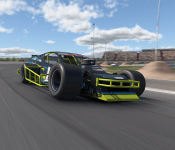
Round 8 of Season 16 in the Red Light Racing (RLR) Skitter Creek Modified Series brought a stacked 19-car field to Maine’s historic Oxford Plains Speedway, affectionately known throughout short-track culture as “The Big O.” The 3/8-mile asphalt oval presented a deceptive test of discipline, defined by minimal corner banking that gave drivers the sensation of turning left almost continuously around the layout. Adding to the spatial trickery was the absolute absence of an outside wall off Turn 4 and along the backstretch, robbing competitors of critical visual exit references and forcing them to rely on pure muscle memory when applying the throttle. Down low, a treacherous, white-painted inside curb stood ready to violently upset the geometry of any car that clipped it, while daytime heat warmed the track surface into a slick, single-grooved surface where securing the bottom line was paramount. The stakes were immensely high in the title hunt; following a dominant win at Sonoma Raceway, Luke Logan Allen had trimmed championship leader James Lowe’s advantage down to 59 points. Qualifying thus became the pivotal moment of the afternoon, and five-time series champion Dalton Williamson—known throughout the paddock as “The Sheriff”—put on a masterclass in his #1 open-wheel modified. Williamson captured the pole position by nearly a full tenth of a second, securing the prized inside line ahead of veteran Kenny Allen in second, Mark “The Raven” Poe in third, Ethan Troutman in fourth, and Lowe starting fifth.
When the green flag finally released the field, Williamson executed a textbook launch from the inside groove to command the race. Behind him, drivers wrangled severe cold-tire rear instability on the slick pavement, leading to immediate drama on the third lap when Brian Bianchi suffered a sudden loss of rear traction off Turn 4. Bianchi executed an impressive 360-degree spin across the track before gathering the car up without major structural damage, triggering the night’s opening yellow flag and offering an early warning of Oxford Plains’ unforgiving nature.
The early restart thrust the field directly into the brutal operational dynamics of Oxford Plains, a punishing process driver AJ Hamel accurately labeled “restart roulette.” Because the outside groove offered virtually no grip while relentlessly roasting a car’s right-front tire, drivers stuck up top were severely penalized as inside-lane racers refused to yield an inch of space. Early-to-mid-race restarts steadily destroyed the track position of high-line victims; third-place starter Mark Poe and second-place starter Kenny Allen both found themselves pinned on the outside, helpless as inside competitors shuffled them backward. Luke Logan Allen suffered a similar fate after getting trapped up high, fading down the order from his seventh starting spot. Conversely, championship leader James Lowe put on a clinic in restart survival from his fifth starting position, avoiding high-line traps with calculated patience, pinning opponents wide when necessary, and systematically carving his way up into the runner-up spot.
With Williamson building a comfortable lead out front, mid-race battles intensified throughout the pack while drivers managed traffic and lap-car dynamics. Mid-pack racers like Chris Stofer—fresh off his third-place podium at Sonoma—navigated the tight confines around 13th position, trying to avoid the incidental contact inherent to short-track checkups. Around Lap 40, an accordion-style stack-up forced AJ Hamell to adjust his line, resulting in a gentle rear nudge from Lowe that sent Hamell into a semi-spin; though Hamell gathered his machine after mowing the infield grass, the lost track position eventually prompted him to pull off into the infield and take a premature retirement. Meanwhile, Season 12 champion Jeff Aho settled into third place, hovering roughly three seconds behind Williamson and Lowe. Recognizing he lacked the sheer raw speed to catch the top two on equal terms, Aho intentionally logged laps to conserve his right-front rubber, content to ride in third and patiently await a caution. That opportunity materialized between Laps 70 and 75, when a sudden mid-pack checkup caused Alex Sullivan to make violent contact with the frontstretch wall, destroying his car and bringing out a late-race yellow flag that erased Williamson’s lead and bunched the field for a dramatic sprint to the finish.
When the green flag dropped for the late-race restart, the gentleman’s agreement gave way to frantic physical racing as drivers abandoned long-term line strategy. On the initial green-flag drop, tight inside contact between Jeff Aho and Marlo Straughn sent Aho sliding, temporarily shuffling the Season 12 champion back into the middle of the pack. The frantic late yellow flags played directly into the hands of Straughn, who had staged a remarkable drive from 11th on the grid. Channeling his extensive real-world short-track roots at Seekonk Speedway, Straughn had spent the early and middle portions of the feature deliberately conserving his tires. While his rivals cooked their right-front rubber fighting the high line, Straughn retained exceptional drive-off power out of the corners during the final 20 laps, slicing through the field to capture a brilliant third-place podium finish. Right behind him, Eric “Teapot” Stout mounted his signature late-race charge, carving past worn-out cars from his 12th starting position to claim fourth. Aho displayed equal grit, recovering rapidly from his late contact to fight back to a fifth-place result.
At the front of the field, Dalton Williamson remained completely untouchable. Mastering every restart, managing lap traffic, and maintaining flawless line discipline, “The Sheriff” brought the #1 car across the finish line to complete a flawless wire-to-wire victory, leading all 100 laps from pole position. James Lowe crossed the line in second, executing a vital championship drive that dramatically widened his points cushion over Luke Logan Allen, who could only manage a ninth-place finish after his high-line misfortunes. With Williamson re-establishing his authority at “The Big O” and Lowe taking firm command of the title battle, the RLR Skitter Creek Modified Series now turns its attention to its next high-stakes challenge: a double-header twin-60s feature at Concord Speedway.
Kendale Paul Hunts Down Kalisto for ISRA Kentucky Opener Victory
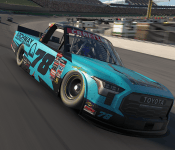
The ISRA Tuned-Up Truck Series presented by Sim Gaming Expo launched its inaugural season at Kentucky Speedway with an intense 125-lap contest that tested chassis balance, tire management, and strategic discipline. Marking a major departure from the league’s previous open-wheel machinery—such as the high-downforce Lotus 79—the new fendered stock trucks required drivers to drastically alter their racecraft. Operating heavy, low-downforce vehicles, competitors could no longer rely on front and rear wings to stick the truck to the asphalt; instead, they had to keep their machines yawed out through corner center, controlling slip angles through delicate throttle modulation. Track conditions at Kentucky exacerbated the physical challenge, as hot daytime surface temperatures rendered the abrasive, un-reconfigured pavement exceptionally slick. The circuit’s asymmetrical layout created two distinct driving environments: Turns 1 and 2 offered a wide-open, multi-groove sweeping arc, whereas Turns 3 and 4 demanded heavy braking, precise diamonding of the entry, and commitment to the flat bottom groove. Compounding the setup strain, league officials granted crew chiefs control over fuel-injection mapping, adding a mandated extra 5% horsepower that yielded an additional 3 to 4 mph down the straightaways. In qualifying, Kendale Paul mastered the slick conditions to earn the pole in his No. 78 Toyota with a time of 30.996 seconds. Paul shared the front row with Tony Blake Brewer, while open-wheel veterans Vern Hawkins, Chris Ragan, and Ryan O’Donohue rounded out the top five in a competitive 25-truck field.
When the green flag dropped, Vern Hawkins executed a textbook launch, powering past Paul into Turn 1 to assume the early lead. As Hawkins built a quick half-second cushion, two distinct philosophies emerged across the field. While mid-pack contenders engaged in aggressive early battles, Paul adopted a long-view conservation strategy. The pole-sitter intentionally dropped back to fifth place during the opening laps, allowing his tires to heat up gradually on the abrasive asphalt while saving tread depth for the end of the fuel stint. Further back, Austin Hund’s truck made steady progress from his 11th-place starting spot, carving through traffic alongside Ragan. Drivers quickly learned the nuances of stock truck draft dynamics, using side-drafting down the backstretch to stall an opponent’s momentum before diving into the braking zone of Turn 3. As the run stretched past Lap 20, tire degradation began to equalize the field. Paul initiated his charge back toward the front, steadily running down Hawkins, whose early pace had heavily worn his right-side rubber. By Lap 35, Paul executed a classic Kentucky slide-job off Turn 4 to snatch the lead, while Hawkins brushed the outside wall off Turn 2 while attempting to hold his quarter-panel momentum.
By Lap 40, severe tire degradation triggered the initial green-flag pit window as drivers including Hawkins, Brewer, and O’Donohue elected to pit for fresh rubber to undercut the leaders. However, the race’s strategic trajectory shifted dramatically on Lap 46 when the first caution flag of the night flew. Contact on the frontstretch apron near pit entry between Albert Welzker and Matt Wagner caught early pitters in a precarious trap, pinning drivers like Hawkins and O’Donohue a lap down. Fortunately for those caught behind the pace car, wave-around rules enabled trucks that had extended their stints or scrambled through pit road during the yellow cycle to unlap themselves and rejoin the tail of the lead lap ahead of the Lap 48 restart, completely reshaping the running order.
Capitalizing on clean air and the single-file wave-around restart structure, Lionel Calisto—nicknamed ‘Little Train’—initiated a stunning mid-race charge. Having lined up 21st on the grid, Calisto leveraged aggressive restart positioning to locomotive his way directly to the front. Once in clear air, Calisto laid down blistering lap times, opening up a two-second cushion over the field. Behind him, a fierce four-truck drafting pack featuring last season’s historic F1 champion Matt Taylor, Hund, Wagner, and Paul engaged in a tactical stalemate. The pursuers traded lines and executed side-draft passes, attempting to keep Calisto within reach without prematurely destroying their second set of tires.
As the race entered its final third between Laps 80 and 90, the leaders faced their final green-flag pit stop cycle. Kentucky’s sweeping, curved pit entry presented immense danger under hot, slick conditions, demanding precise deceleration on the apron. Broadcast commentary briefly misidentified a spinning truck on pit road as Matt Taylor; however, official scoring confirmed that Taylor executed a clean entry, maintained a solid pace, and recovered smoothly to secure a fifth-place finish. The pit road casualty was actually Jim Herrick, who overcooked his entry speed, spun across the slick apron, made wall contact, and was slapped with a pit entry control penalty. Strategy timing diverged sharpest among the leaders: Calisto pitted early on Lap 80 to defend his track position, whereas Kendale Paul strictly executed his pre-calculated race blueprint by stretching his stint to Lap 90. Paul’s patience rewarded him with a crucial three-lap tire freshness delta for the final 35-lap sprint.
Rejoining the track behind Calisto, Paul unleashed the full capability of his fresher rubber, systematically erasing Calisto’s lead. On Lap 109—with 16 laps remaining—Paul made his winning move, driving deep underneath Calisto through Turns 3 and 4, utilizing the flat apron line to clear the No. 2 for good. As Calisto’s earlier hard charging caused his tires to fade, both Hund and Wagner closed in to contest the podium. In a dramatic late-race duel for second, Wagner and Hund traded paint coming off Turn 4, both pancaking their right-side body panels against the outside wall before Hund secured the position. Meanwhile, late-race lap times underscored the incredible track evolution, as Ryan O’Donohue recorded the overall fastest lap of the race with a 30.996-second flyer—matching Paul’s pole-qualifying time to the thousandth of a second. Kendale Paul took the checkered flag cleanly to claim victory in Round 1, followed by Hund in second, Wagner in third, Calisto in fourth, and Taylor rounding out the top five. Post-race, Paul praised his disciplined strategy, noting that sticking to his calculated Lap 90 pit plan was the key to victory before looking ahead to the fence-running multi-groove oval at Homestead-Miami Speedway.
Cortney Nelson Fends Off Relentless Ogle Siege at Martinsville
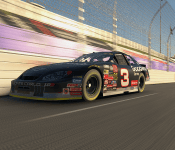
Round 31 of the OBRL YesterYear Racing Cup Series Season 9 Chase brought the 20-car field to the historic half-mile paperclip of Martinsville Speedway, setting a high-tension backdrop for a critical playoff showdown on the flat short track. Pole sitter Ben Sheppard and Cortney Nelson brought the field to the green flag, with Sheppard initially using his inside launch to control the early pace. However, the race reached a sudden, dramatic inflection point on lap 13 as the lead pack barreled into Turn 3 under heavy braking. Sheppard suffered an apparent mechanical failure or severe brake lockup that violently pitched his #69 rightward, slamming the outside wall with heavy impact. The catastrophic damage instantly transformed Sheppard’s night from leading off the front row to an early retirement, completing a bitter “first to worst” exit that brought out the evening’s opening caution.
Following Shepard’s sudden exit, Cortney Nelson assumed control of the race in his black #3 Chevrolet and immediately put on a bottom-groove masterclass along Martinsville’s low curbing. Navigating the heavy Gen 4 stock car requires constant chassis manipulation; to combat severe entry understeer and center-apex tightness, Nelson systematically adjusted his cockpit brake bias rearward, allowing him to rotate the rear end through the flat concrete apron without snapping into wheelspin upon acceleration back onto the asphalt straightaways. Even as the thermal load caused his brake rotors to glow bright red entering Turn 3, Nelson maintained immaculate throttle discipline over long green-flag runs. Tom Ogle, piloting the #11 Chevrolet, emerged as Nelson’s primary antagonist. Ogle hounded the leader lap after lap, forcing both drivers into a grueling pace that matched qualifying lap times across multiple restarts while threading their way through dense lap traffic on the tight half-mile circuit.
Mid-race action erupted into continuous tumult across the field as drivers battled intense nose-push and narrow racing lanes. On lap 26, Andrew Medlin got loose entering Turn 1, triggering a chain reaction that left Greg McDaniel with nowhere to go except straight into the left-rear bumper of Matt Watkins. The contact sent Watkins into a sweeping 360-degree spin across the apron. Miraculously, Watkins avoided outside wall damage, kept his engine running, and methodically sliced his way back through traffic to climb into third place. Behind them, Eric Essary executed an extraordinary front-stretch near-spin save, wiggling violently off Turn 4 but keeping his machine off the concrete wall to remain in top-five contention alongside fourth-place Medlin. Meanwhile, Lloyd Moore put on a driving clinic, climbing 12 positions into the top five by employing a telemetry-defying “high entry, diamonding exit” line that bypassed center-apex tightness. Secondary incidents saw John Hastings make the save of the night, sliding high through Turns 3 and 4 to dodge a multi-car stackup triggered when Bill Martin misjudged corner entry against Andy Thomas, sweeping up Alan Wannamaker. Elsewhere, Clay Walker suffered terminal front-end damage and a subsequent mid-race disqualification following contact with Robert Guarisco, while mid-pack contenders like Tommy Emasie and Brian Lynch fought fiercely for track position.
Tactical pit road execution under caution elevated the tension down the stretch. During Caution 5 on lap 133, the leading pit crews engaged in a razor-thin micro-battle, with Ogle and Nelson exiting pit road separated by a mere 0.2-second delta following lightning-fast stops. Later, under caution with under 30 laps remaining, championship points leader Dwayne McArthur executed a high-stakes strategy gamble by taking just two right-side tires on pit road, jumping position to restart third. However, this strategy carried a severe tire-equity penalty, creating a sharp handling mismatch between his fresh right-side Goodyear rubber and worn left-side tires. McArthur wrestled his severely unbalanced car through the final stint, fending off four-tire chargers to secure a gritty sixth-place finish behind fifth-place Essary and fourth-place Medlin. By doing so, McArthur successfully preserved a 33-point lead over Watkins in the Season 9 Chase standings, while Lynch in the #9 Hooters Chevrolet and Wannamaker crossed the line in the lower half of the top ten.
A final caution period triggered on lap 184 set up a decisive 15-lap sprint to the checkered flag. Cortney Nelson executed a flawless final restart, getting a superior drive off Turn 4 to clear Tom Ogle entering Turn 1. Ogle mounted a final desperate charge over the closing laps, battling intense physical heat and exhaustion inside his VR headset after logging nearly 200 qualifying-pace laps. Post-race, Ogle praised Nelson’s absolute precision, noting that the leader drove with the disciplined consistency of a road-course racer along the bottom curb. Watkins, despite struggling to find chassis comfort and ideal brake bias settings following his earlier spin, held on for a remarkable third-place podium recovery. Nelson crossed the line a fraction of a second ahead of Ogle to seal a dominating performance in which he led virtually every lap. The final top-six rundown featured Nelson taking the victory, followed by Ogle in second, Watkins recovering to third, Medlin in fourth, Essary in fifth, and McArthur in sixth, reshaping the playoff momentum as the OBRL Chase prepares for high-speed drafting dynamics at Atlanta.
Patience, Precision, and Position: Charles Roth Survives Green-Flag Grind at Martinsville
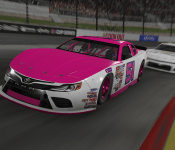
The Bootleg Racing League (BRL) Late Model Invitational Series returned to the historic paperclip-shaped confines of Martinsville Speedway for Round 2 of Season 36, marking the league’s 29th official visit to the iconic venue. Over its storied tenure at the track, Martinsville has cultivated a reputation for unpredictable short-track warfare, producing 18 different winners across its previous 28 events, with league veteran Donnie Moore adding to that history by making a series-record 25th career start at the speedway. Under standard BRL regulations, the starting grid inverted the top 13 finishers from the opening round. However, breaking pre-race news altered the front-row dynamics when expected high-order starters Luke Logan Allen and Marino Valente were both absent from the lineup. These last-minute scratches elevated Jeff Sharp to pole position, with Charles Roth lining up alongside him on the outside of the front row, while Round 1 winner and three-time defending series champion James Lowe faced a steep climb through dense traffic from the 10th starting spot.
Jeff Sharp controlled the field at the drop of the green flag and established early command, leading the first 47 laps of the feature. Behind him, the field settled into a taut, single-file “conga line,” where drivers immediately began wrestling with Martinsville’s unique topographic and mechanical demands. The track features a subtle downhill gradient along the backstretch into Turn 3, causing cars to carry noticeably more entry speed than into Turn 1, making it substantially harder to haul the chassis down to hug the low concrete curb. Furthermore, under iRacing’s late-model physics model, actual rubber wear is secondary to tire thermodynamics; the primary threat to performance is right-front tire heat buildup caused by aggressive trail-braking and corner-entry push. In low-horsepower late models, scrubbing entry momentum severely handicaps straightaway drive, forcing competitors to balance throttle rotation with steering precision to conserve their front tires for the long haul.
The middle stint transformed the race dynamic as James Lowe showcased his championship craft, methodically slicing through dense traffic from 10th up to 2nd position. Up front, Sharp’s early dominance came to an abrupt end on lap 48. As Sharp squeezed his entry a fraction too hard, his right-side tires pushed above the preferred concrete bottom groove onto the high-line pavement, picking up hot rubber marbles. The sticky debris instantly stripped his front-end entry grip, causing his car to push wide off the inside line. Charles Roth capitalized instantly, executing a clean, decisive inside pass to take over the race lead, with Lowe sliding into second shortly thereafter. Remarkably, despite relentless bumper-to-bumper battles throughout the field, the entire 100-lap feature ran completely caution-free. The unbroken green-flag duration turned the event into an exhausting test of mental focus and physical force-feedback stamina, denying drivers a single yellow-flag breather to rest their arms or cool their overheated tires.
The final 50 laps devolved into a high-tension tactical duel between Roth and Lowe. Applying continuous late-race pressure, Lowe hounded the leader’s rear bumper, searching for an overtaking lane off the tight turn exits. Mechanically, Lowe’s preferred passing strategy was to “diamond” the corners—arcing high on entry to cut down sharply across the apex and launch down the straightaways with maximum exit drive. However, Lowe was tactically trapped by John Wilson, who was locked directly onto his rear bumper in 3rd place, with Michael Goodman in 4th and Joseph Snyder in 5th close behind. Had Lowe drifted high to diamond the corner entry, he would have left the bottom groove open for Wilson to wrap underneath him and steal position. Confined to the lower line, Lowe resorted to filling Roth’s mirrors and applying subtle bumper taps through turn entry. Roth delivered a defensive masterclass under heavy harassment, ignoring his rear-view mirror, hitting his braking marks with surgical precision, and managing his corner-exit throttle application to prevent wheelspin.
As the race entered its closing laps, the unrelenting physical demand of non-stop heavy braking began to test both drivers to their absolute limits. Desperate to engineer a winning move before time ran out, Lowe made a critical attempt on lap 95 to arc his car slightly wider into Turn 1 to build straightaway momentum. However, he clipped the sharp inside curb, sending a jolt through the chassis that momentarily unsettled his car’s platform. The resulting loss of momentum granted Roth a crucial two-car-length cushion entering the white-flag lap. Unbothered through the final two corners, Roth executed a flawless final lap to hold off the defending champion and take the checkered flag for a hard-fought victory. The unbroken green-flag finish finalized the top five overall standings, with Charles Roth capturing 1st place, James Lowe holding on for 2nd, John Wilson claiming 3rd, Michael Goodman placing 4th, and Joseph Snyder rounding out the top five in 5th.
Luke Logan Allen Dominates Sonoma 30-Lapper Wire-to-Wire
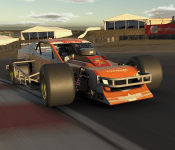
Round 7 of Season 16 for the RLR Skitter Creek Modified Series arrived at Sonoma Raceway for a demanding 30-lap feature on the NASCAR Short Circuit layout. Deploying 600-horsepower Tour Modifieds onto a counterclockwise road course presented severe technical hurdles, bypassing the carousel section to create a higher-speed layout featuring blind crests, unseen apexes, and treacherous curbs. Negotiating elevation shifts like right-hand Turn 2 up over the hill proved exceptionally hazardous, as the massive engine air cleaner severely obstructed right-side vision. Drivers faced a similar sightline dilemma at the final corner, Turn 11, where a high roll-bar cockpit vantage point completely obscured the inside wall, forcing racers to blindly gauge proximity to the barrier where hugging the unseen concrete yielded maximum grip but carried catastrophic risk. Compounding these visual constraints were unique transmission and setup dynamics. With teams transitioning from custom, low-fuel qualifying setups that artificially tightened corner entry to heavy-fuel race loads, competitors had to completely recalculate braking points and throttle application. Furthermore, the two-speed transmission constrained drivers primarily to second gear, which spanned nearly the entire straightaway without striking the rev limiter; dropping into first gear generated excessive RPMs that instantly spun the rear tires on corner exit. Without traditional downshifts to assist chassis rotation, drivers were forced to delicately modulate pedal pressure to prevent rear tire overheating and maintain traction across corner entry and exit.
When the 19-car field filed out onto the circuit for its single pace lap, pole-sitter Luke Logan Allen led the lineup alongside returning contender Hayden Austin on the front row. Points leader James Lowe lined up directly behind in third position on the inside of row two, flanked by Ethan Troutman in fourth, with Kenny Allen starting fifth and road-course veteran Chris Stofer in sixth. Navigating the pacing sequence and the final hairpin with discipline, the field maintained single-file order to avoid early contact in Sonoma’s unforgiving rhythm sections. As the green flag waved, Luke Logan Allen immediately asserted control from the low side into Turn 1, securing the point position clear of Austin and Lowe as the entire grid safely negotiated the opening laps.
Once out front, Luke Logan Allen surged into complete command, establishing an unassailable wire-to-wire lead that quickly expanded past 12 seconds over the field. Behind the leader, James Lowe demonstrated strong early pace, aggressively stalking Hayden Austin before completing a clean overtake to seize second position. Lowe’s momentum was short-lived, however; while climbing Turn 2 up the hill, he misjudged the obstructed apex and clipped the grass with his right-side tires, upsetting the chassis over the curb and going loose into an off-track excursion. The error not only cost Lowe position to Chris Stofer, but the trip through the grass picked up debris and spiked his rear tire temperatures, severely degrading rear traction on subsequent corner entries. Shortly thereafter, Kenny Allen suffered a deep off-track excursion through the runoff, managing to avoid the concrete barriers but dropping five to six positions and falling nearly 19 seconds off the race lead as he scrambled back onto the circuit.
As tire degradation mounted past the halfway mark, handling dynamics shifted dramatically, sparking intense battles through the field. A major focal point emerged around sixth position, where three-time champion Eric Stout struggled with severe rear-tire degradation and held up a tight, four-car train. Ethan Troutman, recovering from a sluggish start, methodically stalked Stout’s car, eventually getting a strong exit out of the final hairpin to win a drag race down the front stretch and complete the pass for sixth into Turn 1. Bradley Stefane seized upon Stout’s lost momentum to follow through into seventh, dropping Stout to eighth. Meanwhile, Kenny Allen mounted a methodical recovery from his earlier mistake, working his way through traffic to climb back into ninth position right behind Stout. Across the field, drivers were forced to back up their corner entries and soften throttle application to keep their overheated rear tires from sliding out.
In the closing stages, the battle for the remaining top-five positions reached a dramatic climax. Mark Poe mounted a fierce charge, executing a decisive late-race dive inside James Lowe into the Turn 11 hairpin to capture fourth place. Poe then set his sights on Chris Stofer for the final podium spot, diving underneath Stofer to temporarily steal third position. However, Poe drifted slightly wide exiting the technical S-curves, putting his left-side tires into the dirt; the brief loss of momentum gave Stofer the traction needed to execute a swift crossover pass and reclaim third for good. Out front, Luke Logan Allen effortlessly navigated the final lap to cap off a dominant wire-to-wire victory, crossing the line over 12 seconds clear of runner-up Hayden Austin. Chris Stofer held off Poe on the drag to the line to secure third place, while James Lowe stabilized his handling to bring his car home in fifth, leaving Mark Poe in fourth after a spectacular drive.