

Watkins Dominates Atlanta with a Flawless Performance
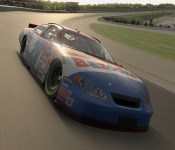
Hampton, Georgia — The “Duel with the Devil” delivered exactly the kind of brutal tire management battle drivers expected at Atlanta Motor Speedway, but Matt Watkins turned the 130-lap marathon into a clinic in control. In a rare occurrence for the OBRL YesterYear Racing Cup Series, the entire event ran caution-free from green to checkered, and Watkins’ No. 20 Bazooka machine led nearly the entire distance on his way to a commanding first career victory in the series.
The race took place on the abrasive “old” Atlanta surface, a configuration drivers quickly described as even more punishing on tires than the previous week’s challenge in the Nevada desert. The worn pavement demanded patience from the moment the green flag waved. Right-side tires began surrendering grip within a handful of laps, and the Gen 4 cars, already known for their edgy aerodynamics in traffic, required delicate throttle control to keep the rear ends planted.
Kevin Strandberg started from the pole in the No. 01, but Watkins wasted little time asserting himself as the driver to beat. Once he found his rhythm against the outside wall, he began building a gap that steadily stretched beyond the reach of the chasing pack. The high line quickly proved to be the preferred groove around the mile-and-a-half oval, allowing drivers to carry momentum through the sweeping corners while minimizing the punishment to their tires.
While Watkins quietly separated himself from the field, the real intrigue centered on pit road. With a fuel window hovering between 50 and 52 laps, teams knew the race would hinge on two green-flag stops, and timing those stops became a chess match. Ben Shepard, piloting the No. 69 City Chevrolet throwback, made the boldest call of the afternoon by short-pitting early. The gamble vaulted him from mid-pack contention into the race lead temporarily as the pit cycle unfolded, putting him in position to challenge the frontrunners.
Watkins and Andrew Kotska took the opposite approach, committing to a long-run strategy that squeezed every possible lap from their fuel tanks. By stretching their first stint deeper into the race, they ensured a significant tire advantage for the closing stages. When the final round of stops cycled through, that discipline paid immediate dividends. Armed with an eight-lap tire advantage, Watkins sliced back into the lead on lap 97 and began pulling away once again.
Behind him, the fight for the podium unfolded in relentless fashion. Courtney Nelson guided the No. 78 Kevin Harvick throwback through the corners with the car dancing at the limit, drifting just enough to maintain momentum while holding off challengers closing from behind. The balancing act paid off as Nelson secured second place, later describing the car as “loose off, tight in,” a combination that required constant correction but ultimately produced the speed needed to survive the long green-flag grind.
Shepard’s strategy held firm through the final stint, earning him a well-deserved third-place finish after spending much of the race cycling through the pit sequence. Strandberg rebounded from losing the early lead to bring his car home fourth, while a tense late-race duel between Tom Ogle and Andrew Kotska for position ended with contact as they crossed the line. Ogle managed to hold onto fifth in the scramble, while Kotska slipped back to 11th in the final order.
Watkins’ margin at the front never truly came under threat in the closing laps. The No. 20 machine rolled through the worn Atlanta corners with the calm precision of a driver who had unlocked the track’s secret rhythm. In victory lane, Watkins admitted even he was surprised by the scale of the dominance.
“That surprised me,” he said afterward. “I found something in practice with the top line that not only caught really well off the corner but was saving the tires too. The plan worked perfectly.”
Watkins also praised the discipline of the field, noting that a caution-free race on such a slick, unforgiving surface was a testament to the drivers involved. Thirty-five competitors managed the delicate balance between aggression and restraint, producing one of the cleanest races the series has seen despite the track’s notorious reputation.
With four races now in the books and a different driver claiming victory each week, the YesterYear Racing Cup Series continues to showcase the unpredictable character of the Gen 4 era. The next stop sends the field to the unforgiving walls of Darlington Raceway, where the “Lady in Black” waits patiently to hand out its famous stripes.
James Lowe Dominates New Smyrna, Extends Championship Lead
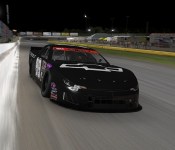
New Smyrna Beach, FL — In a night of tactical tire management, calculated aggression, and high-stakes short-track racing, James Lowe captured his fourth victory of Season 33 in Round 8 of the Bootleg Racing League Late Model Invitational Series at New Smyrna Speedway. Starting 12th due to the league’s inverted grid, Lowe methodically carved his way through the field, showcasing both patience and precision to reinforce his status as the championship favorite.
The race began with early drama at the front. Pole-sitter Adam Schoen appeared loose coming through the high-banked turns around lap 15 and made contact with Chris Worrell, sending Schoen into the inside wall and ending the pole-sitter’s night prematurely. Worrell inherited the lead temporarily, but Lowe was already on the move, gaining six positions in the opening laps with methodical, “two or three cars a lap” passes that highlighted his superior pace and track awareness.
By mid-race, Lowe had positioned himself within striking distance of the front runners. Following a restart, he utilized the high line to perfection, pinching Worrell and seizing the lead for good. Lowe later credited his success to early experimentation with the top groove, which, while tough on tires, allowed him to make the decisive passes needed to reach the front.
Behind the leader, battles raged for the remaining top positions. Ruben Altice, Todd Liston, and Tre Blohm engaged in a multi-lap skirmish for fourth place. Altice, who had climbed as high as second at one point, struggled with a loose car as tire wear mounted, eventually yielding positions to Liston and Bloom. Bloom, executing a late-race surge while preserving his equipment earlier, passed Liston to claim fourth, while Kenny Allen delivered one of the night’s standout drives, moving from 18th to finish sixth after navigating through attrition and heavy traffic.
The closing laps brought the most excitement behind Lowe. Ed Foster, known as “The Adelaide Blade,” applied relentless pressure on Worrell for second, engaging in a side-by-side battle down the stretch. Worrell managed to hold off Foster by just 0.005 seconds to claim the runner-up position, while Foster settled for third. Both drivers were pleased with their performances, with Foster noting he is still “90% of the way there” in mastering the late model car.
Lowe’s victory was nearly three seconds clear and came through a combination of skill, strategy, and composure. With the win, he extends his points lead over Foster as the series heads into its final three races, further cementing his position as the man to beat.
In his post-race interview, Lowe added a touch of humor to the night, famously opting for maple syrup over more “exotic” flavors, but the underlying message was serious: he is firmly in control of the championship hunt. As the BRL Late Model Invitational Series moves on to USA International Speedway next week, Lowe’s combination of speed, strategy, and savvy makes him the clear favorite for the Season 33 crown.
Lowe Dominates Greasy New Smyrna for Sixth Win of the Season
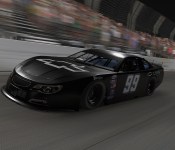
New Smyrna Beach, FL — James Lowe extended his commanding run in the Bootleg Racing League SteelCraft Structures Super Late Model Series, claiming his sixth win in eight races at the high-banked New Smyrna Speedway. On a night defined by “greasy” track conditions and early-race chaos, Lowe once again proved nearly untouchable, further solidifying his points lead as the championship heads into the final stretch of Season 26.
The 100-lap feature began with Jeff Sharp on the pole, but the tight and slippery surface quickly produced trouble. On lap two, Benny Ellison spun on cold tires, immediately bringing out the first caution. Adam Schoen and Kurt Smith had opted to start from pit road to avoid early incidents, though the strategy offered only limited protection against the slick track, with temperatures hovering around 79 degrees.
Sharp led the initial restart, but Todd Liston and Lowe quickly surged forward. By lap 11, Liston had taken the lead, just before a second caution slowed the field when John Wilson slid sideways off Turn 4, narrowly saving his car from hitting the wall. The early laps set the tone for a night where patience and tire management would be as critical as outright speed.
The defining moment of the race came on a subsequent restart when Lowe executed an aggressive outside pass on Liston, taking the lead with authority. From there, Lowe began managing his gap, demonstrating a combination of skill, experience, and composure. Multi-car incidents continued to disrupt the pack, including a heavy crash for Steve Hilbert following contact with Lowell Jewell, which ended Hilbert’s night. Later, Lewis Flowers delivered a spectacular “save of the season,” spinning three full revolutions yet avoiding the wall during the fourth caution.
As the race approached the halfway point, Todd Liston, Lowe’s primary challenger, clipped the wall exiting Turn 4. The impact ripped off the front bumper and nose of his #87 machine, severely compromising his performance. Ruben Altice, “The Quiet Man,” capitalized on Liston’s misfortune, moving into second and setting up a tense battle with Lowe for the remainder of the race.
Meanwhile, Trey “The Caveman” Bloom, starting deep in the field, fought through traffic to challenge the damaged Liston car, eventually finishing fourth. The midfield remained chaotic, with aggressive passes and cautious maneuvers making every lap unpredictable.
The final stage settled into a green-flag sprint. Lowe, in command, proved “too tough to tame,” extending his lead to over three seconds. Late-race drama struck when Benny Ellison spun into the grass attempting a pass on Liston for fifth, allowing Liston to limp home in sixth. Ruben Altice maintained a strong second-place finish, while Chris Worrell rounded out the podium in third.
After the checkered flag, Lowe credited his car’s balance and patience on the tricky track, admitting he was loose on restarts but “stuck fairly decent” once clear of traffic. Altice praised the challenging conditions, describing the track as feeling like an “oil slick” in every turn. The race further solidified Lowe’s dominance, giving him a 75% win rate through eight races and setting him up as the clear favorite heading into the final four rounds of the season.
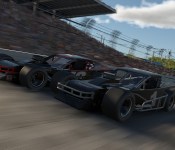
Stout Wins a Drag Race for the Ages at Nashville
Nashville, TN — Round 7 of the Red Light Racing Skitter Creek Modified Series delivered one of the most electrifying finishes in league history at Nashville Fairgrounds Speedway, where Eric “Teapot” Stout edged longtime rival Dalton Williamson in a breathtaking sprint to the checkered flag. After 100 laps of relentless short-track combat, the two champions crossed the line separated by just 0.061 seconds, with Stout narrowly securing the victory in one of the closest finishes the series has ever seen.
The night quickly developed into a duel between two of the league’s most decorated drivers. Williamson, a four-time champion, started from pole position with the three-time champion Stout alongside him on the front row. Williamson initially jumped out to a strong lead, but Stout remained within striking distance despite an early moment where he locked his tires to avoid contact with Kenny Allen while navigating traffic.
As the race settled in, the front two separated themselves from the rest of the field, turning the race into a high-level showcase of racecraft. The powerful Tour Modifieds demanded precision on Nashville’s abrasive 0.710-mile surface, where the notorious bump exiting Turn 2 and the falling banking in Turn 4 punished even small mistakes. Both leaders negotiated the hazards flawlessly while building a comfortable margin over the chasing pack.
Behind them, the race was far more turbulent. Early incidents eliminated several contenders, including AJ Hamel, while Patrick Stout saw his night end prematurely after a heavy collision with Bradley Stefane resulted in a race-ending meatball flag. The mid-race caution around the halfway point proved pivotal when the leaders headed to pit road for fresh tires. In a critical race off pit lane, Stout managed to beat Williamson back onto the track, giving him the inside advantage for the restart and setting the stage for a tense closing run.
Over the final 30 laps, the two rivals traded momentum as Williamson experimented with the outside lane while Stout protected the inside. With one lap remaining, Williamson made his final move, drawing alongside Stout as they thundered into Turn 1. The pair remained locked side-by-side through the final corners, leaning on each other slightly as they powered off Turn 4 toward the checkered flag. Stout found just enough grip on the outside line to edge ahead by inches at the stripe.
After climbing from his car in victory lane, Stout admitted the final laps pushed him to the limit. He revealed the car had become extremely tight entering Turn 3 and joked that if the race had lasted one more lap, Williamson likely would have completed the pass. Williamson, despite finishing second, shared the excitement of the moment, calling it one of the most enjoyable races he had ever been part of and praising the challenge of managing the powerful Modifieds in both clean air and heavy traffic.
Kenny Allen completed the podium in third after surviving a fierce battle behind the leaders. Fred LeClair finished fourth, while Josh Buckley rounded out the top five after a steady drive through the chaos.
With another dramatic chapter written in the Stout-Williamson rivalry, the Skitter Creek Modified Series now heads to Hickory Motor Speedway, where the drivers will return to the more familiar SK Modifieds as the Season 15 championship fight continues to build momentum.
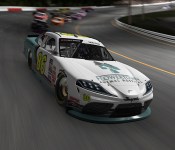
Skelton Silences the Doubters with Wire-to-Wire Masterclass at Nashville
Nashville, TN — Under the lights at Nashville Fairgrounds Speedway, James Skelton delivered the kind of performance that rewrites a season’s narrative in bold ink. In Round 6 of the Red Light Racing League Scrambler Series, Skelton led all 125 laps from the pole, turning months of frustration into a statement victory and officially punching his ticket to the Season 21 playoffs.
Entering the night clinging to the final playoff spot in 12th, Skelton carried the weight of the bubble on his shoulders. He answered that pressure immediately, capturing the pole and launching cleanly at the green flag while the rest of the 19-car field wrestled with the edgy, snap-loose tendencies of the NASCAR O’Reilly Auto Parts cars on the tight Tennessee oval. From the opening lap, Skelton looked composed, precise, and determined not to let this one slip away.
The first major shakeup came on lap 16 when Devin Visnaw looped his machine and slapped the inside wall, triggering an early caution and a round of pit stops. For Skelton, pit road had been a recurring source of heartbreak earlier in the season, but this time his crew delivered. He exited cleanly, maintained control of the field, and never looked back.
As the race settled into its rhythm, tire wear became the looming threat. The Fairgrounds punished rear tires relentlessly, turning corner exits into tightrope acts. Behind Skelton, the battle intensified. Trent Potter and Luke Logan Allen waged a gripping, multi-lap duel that had the broadcast buzzing. Potter eventually cleared Allen and began a determined climb from his 11th-place starting spot into podium contention. Meanwhile, points leader Maxime Theriault and last week’s winner Chris Hammett hovered inside the top five, waiting for an opportunity.
That opportunity seemed to arrive at lap 116, the moment drivers have come to call “Boogie Time.” Just as the leaders appeared settled for a long green-flag finish, Sean Single suffered a violent spin, bringing out a late caution and throwing strategy into chaos. The field split cleanly down the middle. Skelton, Potter, and Conner Blasco chose to stay out on 38-lap-old tires, gambling that track position would outweigh grip. Zack Mitchell and others dove to pit road for four fresh tires, betting on a short-run charge through the field.
Skelton later admitted he was more than a little nervous about restarting on worn rubber, knowing Mitchell’s fresh tires could turn the final laps into a storm. When the green flag flew on lap 124, Skelton nailed the restart, launching perfectly while the pack fanned out behind him. As drivers on new tires tried to slice forward, the field compressed and chaos erupted. A multi-car incident involving Geoffrey Souza sent cars scattering across the racing surface, forcing officials to freeze the field under caution.
The yellow sealed it. Skelton crossed the line having led every lap, completing a wire-to-wire masterclass that erased the doubts and secured his postseason berth. In victory lane, relief was written across his face as he reflected on finally conquering pit road, the “nemesis” that had haunted earlier rounds.
Potter capped an impressive night with a second-place finish, remarkable considering he had only recently acquired the track and arrived just before qualifying after attending his son’s T-ball game. Blasco rounded out the podium in third after committing to the stay-out strategy for crucial points. Mitchell charged to fourth despite the late chaos, and Hammett completed the top five.
With Nashville in the books, the Scrambler Series now turns toward upcoming challenges at Atlanta and New Smyrna, where the playoff picture will continue to sharpen and every decision will carry even greater weight.
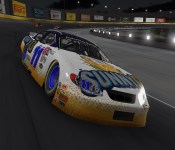
Ogle Dominates the Diamond: A Masterclass in the Desert
Las Vegas, NV — The OBRL YesterYear Racing Cup Series roared into the desert on Sunday, March 1, 2026, for Round 3 at Las Vegas Motor Speedway, and Tom Ogle delivered a clinic in control. In a race shaped by tire conservation and a sweeping transition from sun-scorched afternoon to cool Nevada night, Ogle led 124 of 130 laps, capturing his first victory of the season with authority.
From the drop of the green flag, the 1.5-mile oval reminded the field why it carries a reputation as hot and abrasive. Grip faded quickly, right-side tires surrendered lap by lap, and every driver faced the same equation: push early and pay later, or pace yourself and hope the race comes back. Ogle chose discipline. Starting on the front row, he immediately settled into the bottom groove, hugging the white line and keeping his steering inputs smooth, building a gap that gradually turned from comfortable to commanding.
Behind him, the race unfolded in stark contrast. While Ogle operated in clean air, the pack churned in tight formation, often three-wide through the tri-oval at nearly 195 mph. The Gen 4 machines, trimmed out and twitchy, punished impatience. Kevin Strandberg and Jeff Lyden were among several drivers who brushed the outside wall as aggressive mid-pack battles left little room for error. Even so, the opening segment ran remarkably clean, a testament to the field’s growing respect for the tire curve.
The lone major incident struck around lap 40 when contact involving Jeff Lyden in the No. 39 and Fred Wolford III in the No. 95 escalated into a multi-car wreck, finally bringing out a caution that reset both the field and the strategy board. Most leaders opted for four tires and fuel, and Ogle’s crew executed flawlessly to preserve track position. The restart came with a new variable in play. Utilizing accelerated time progression, the sun dipped behind the grandstands, cooling the surface and tightening the handling balance. Cars that had been free began to snug up, and drivers were forced to recalibrate on the fly.
In the closing green-flag cycle, several contenders rolled the dice. Christian Loschen and Andrew Kotska extended their stints, hoping a timely caution would vault them forward. The yellow never arrived. Though fresher tires allowed them to surge late, the lost track position proved insurmountable. Loschen briefly applied pressure to Ogle after a restart but ultimately slid back to sixth at the finish, while Kotska settled for 12th after his earlier gamble unraveled.
Perhaps the most methodical climb through the field belonged to Dakota Pitsky. Starting 29th, he advanced with quiet efficiency, conserving tires and capitalizing on others’ mistakes to crack the top 10 by night’s end. At the front, however, the spotlight remained fixed on Ogle. With a steady 2.7-second cushion, he never overextended, never abused his equipment, and never surrendered the rhythm that had carried him all evening.
The fiercest fight on track unfolded just behind him. Eric Essary, long regarded as a tire management specialist, defended second place against relentless pressure from Dwayne “The General” McArthur and Matt Watkins. McArthur probed the bottom lane repeatedly, searching for an opening, while Essary rode the higher groove to preserve momentum and used turbulent air to blunt advances. Watkins hovered within striking distance, ready to capitalize on any misstep that never came.
When the checkered flag waved, Ogle crossed the stripe untouched by drama, 2.7 seconds clear of the field, a desert diamond polished by patience. Essary secured a hard-fought second, McArthur completed the podium in third, Watkins claimed fourth, and Strandberg rebounded from earlier contact to round out the top five.
Three races into the season, three different winners have stamped their names onto the 2026 campaign. Next, the series heads east to the high-speed banking of Atlanta Motor Speedway, where tire wear will once again whisper in every driver’s ear, and clean air may prove just as precious.
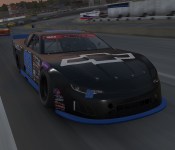
Lowe Reclaims Points Lead with Fortuitous Victory at South Boston
South Boston, VA — A race that appeared firmly in hand for one driver instead became a study in cruel timing and racing fate, as James Lowe capitalized on late-race chaos to win Round 7 of the Bootleg Racing League Late Model Invitational Series Season 33 at South Boston Speedway. While John Wilson dominated nearly the entire 100-lap contest, a controversial caution sequence reshuffled the order and handed Lowe both the victory and the championship lead.
The evening opened with anticipation around pole-sitter Chris Haizlip and front-row starter Wilson, who entered the race still searching for his first win in 32 starts. When the green flag dropped, Wilson wasted no time, “flying the coop” and establishing control at the front of the field.
Behind him, the early laps were anything but calm. Tom Hilbert and Haizlip traded blows for second, while Lowe, starting fifth, wasted little time charging into the top four by lap 10. An early incident saw Ruben Altice spun after contact with Steve Hilbert, yet race control kept the yellow flag tucked away, setting the tone for a night defined by minimal cautions and maximum patience.
For more than 70 laps, Wilson methodically managed a slim but steady advantage of roughly half a second over Lowe. Lowe later admitted he struggled to mount a meaningful challenge, noting that following too closely began to loosen his car in Wilson’s turbulent wake. Wilson, meanwhile, looked untouchable, protecting the inside line and hitting his marks with clinical precision.
Lurking just behind the lead duo was Todd Liston, quietly executing a textbook conservation race. Commentators praised his smooth approach, likening it to being “smooth as a new jar of peanut butter,” as he kept himself within striking distance without abusing his tires.
The race’s turning point arrived late, and abruptly. As the leaders closed in on a dense pocket of lap traffic that included Brennan Myers, Jeffery Hardin, and Bruce Pearson, disaster struck on lap 87. Contact between Ed Foster and Kurt Smith finally brought out a caution. In the confusion under yellow, Wilson made contact with a spinning car. Under iRacing’s automated officiating, Lowe was elevated to the lead, a call the broadcast booth dramatically labeled “the biggest injustice since the church imprisoned Galileo.”
What followed was pure scramble. The restart triggered a multi-car incident involving Adam Schoen and several others, setting up a Green-White-Checker dash to the finish. From the front, Lowe, debuting a striking black-and-blue paint scheme, held firm and brought the field to the checkered flag.
Liston’s disciplined approach paid dividends, earning him a hard-fought second-place finish and his second top-five result of the season. Wilson, after leading 87 laps, salvaged third, a result that felt painfully hollow given his dominance.
In victory lane, Lowe was quick to acknowledge the circumstances. “I hate that happened to John,” he said. “He probably deserved the win tonight. It was nice to get a little luck for once this season.” Wilson, visibly frustrated, summed up his night more bluntly. “Luck did not play a part on my side. It’s a tough break.”
Foster managed to recover for fourth despite his involvement in the decisive incident, but it was not enough to keep hold of the points lead. With the win, Lowe officially reclaims the top spot in the championship standings as the Late Model Invitational Series heads into the final four rounds of Season 33.
At South Boston, precision ruled the night. But in the end, timing ruled everything.
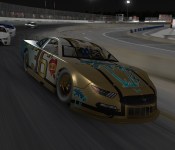
Hardin Conquers South Boston for First Win of the Season
South Boston, VA — The Bootleg Racing League SteelCraft Structures Super Late Model Series visited the historic South Boston Speedway for Round 7, where the tight 4/10-mile “bull ring” delivered a bruising night of short-track racing. With track temperatures holding at 75 degrees and banking that punishes impatience, the Virginia oval produced a breakthrough moment as Jeffery Hardin captured his first victory of the Season 26 campaign.
Following the series’ inversion of the top 13 finishers from the previous round, Chris Worrell started on the pole with Hardin alongside him. Championship leader James Lowe, who had dominated the early portion of the season with five wins in six races, was forced to start deep in the field from 13th. When the green flag flew, the front row settled quickly into single file while chaos brewed behind them, with intense side-by-side racing throughout the pack.
The first incident came early when Lowell Jewell slapped the Turn 4 wall, shedding his front clip shortly after being passed by Lowe. Surprisingly the caution flag never flew, and racing carried on as Jewell’s night ended. As the race settled, Hardin began applying pressure to Worrell for the lead, aided by a newly installed pedal set that provided improved control under braking. The battle escalated when Hardin moved underneath Worrell to claim the top spot. Worrell answered with an aggressive bump-and-run attempt that spun Hardin and triggered a multi-car incident involving Chris Haizlip, Ed Foster, Lewis Flowers, and Bruce Pearson.
Despite the setback, Hardin regrouped as the race wore on. Meanwhile, Lowe faced his own challenges, battling intermittent connection issues that caused him to “blink” on track during the second half of the event. Even so, Lowe clawed his way into the top three, keeping himself firmly in championship contention.
Additional cautions interrupted the closing stages, including a heavy hit for Jeff Sharp following a net-code incident with Adam Schoen that also collected Tre Blohm. Each restart reset the pressure, but Hardin consistently reclaimed control at the front.
The final run turned into a tense three-car fight for the win. Lewis Flowers relentlessly searched for a way around the leader, while Lowe lurked close behind despite his technical struggles. Hardin defended with precision, holding his line and refusing to open the door. When the checkered flag finally waved, Hardin emerged victorious, securing a hard-earned and emotional first win of the season.
Flowers finished second after a determined drive, with Lowe salvaging third on a night that could have gone very differently. Chris Haizlip brought the “Racing Rev” home in fourth, while Kurt Smith completed the top five.
In victory lane, Hardin credited both his new equipment and disciplined defense for the win, acknowledging that mid-race incidents among his challengers also played a role. Lowe admitted his connection issues effectively ended his shot at victory, while Flowers expressed satisfaction with a runner-up finish on a track where passing for the lead comes at a high cost.
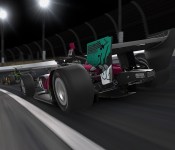
Klendworth Outduels Taylor in Strategic Masterclass at Iowa
Newton, IA — The ISRA Sim Gaming Expo Open Wheel Series left the chaos of Chicagoland behind and dove headlong into the cornfields for Round 6 at Iowa Speedway, a place often described as the fastest short track on the planet. What followed was less about outright speed and more about nerve, patience, and a perfectly timed gamble, as two-time defending champion Kyle Klendworth carved through the field from the back to claim his second win of the Winter 2026 season.
The night began with authority from Matt Taylor, who led the field to green from pole and immediately looked untouchable. Taylor controlled the opening stages with ease, stretching the field and dictating pace as a small stampede of Dallara IR-18 machines fought to keep him within reach. By the midpoint of the 150-lap race, Taylor had built a commanding advantage and appeared well on his way to converting sheer pace into victory.
Behind him, Iowa continued its reputation as an unforgiving test. The bumpy surface and twitchy hybrid powerplants steadily whittled down the 12-car field. Brian Irby was the first to fall, slamming the Turn 4 wall early. Ryan O’Donoghue, running second at the time, spun into the infield and lost multiple laps making repairs. Lewis Hayes saw a promising run evaporate after contact with the wall on a restart. As the laps ticked away, attrition transformed the race into a five-car battle simply to stay on the lead lap.
The turning point arrived during green-flag pit stops. Taylor committed to a long run, choosing to stay out on worn Firestones and squeeze every ounce from the fuel tank. Klendworth, meanwhile, rolled the dice. Starting 11th after failing to post a qualifying time, he pitted early for fresh tires, a move that dropped him two laps down and forced him into attack mode.
What followed was a clinic. On new rubber, Klendworth methodically unlapped himself, carving through traffic and reeling in the leader with startling pace. When Taylor finally relinquished the lead to pit with roughly 35 laps remaining, the math flipped instantly. He rejoined nearly five seconds behind Klendworth, the earlier dominance erased by tire age and dirty air.
The closing laps became a tense chase. Taylor clawed back time with fresher tires, shrinking the gap from five seconds to just over one as the finish approached. But Iowa rewards discipline as much as aggression. Klendworth threaded his way through lap traffic, managing the turbulent air around his car and refusing to open the door. When the checkered flag fell, the gamble stood tall.
Afterward, Klendworth admitted the strategy was born of necessity, knowing an early stop was the only realistic path to victory. Taylor, reflective but candid, pointed to his own overconfidence in tire life as the decisive factor. Behind them, Alex Guyon completed a quietly remarkable drive to third, calling the podium a minor miracle after a difficult practice session.
With Iowa in the books, the Winter 2026 season continues to balance speed with survival. The series now takes a brief pause before an ambitious leap Down Under to Phillip Island Circuit, where the margins will widen, the speeds will soar, and strategy will once again decide who flies and who falls.
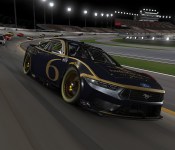
Hammett Breaks Runner-Up Streak with Strategic Masterclass at Nashville
Lebanon, TN — In a race defined by high-stakes pit calls and the sudden unraveling of a dominant points leader, Chris Hammett finally traded silver for gold in Round 5 of the Red Light Racing League Scrambler Series at Nashville Superspeedway. The event featured NASCAR Cup Series Next Gen cars with sequential shifters, and the 1.33-mile concrete oval proved as temperamental as ever, with drivers wrestling “snap loose” handling that punished the slightest miscalculation.
Maxime Theriault began the night from the pole, intent on extending his early-season advantage after two wins in the opening four rounds. Living up to his reputation, Theriault quickly built a gap of more than a second, pacing the field with machine-like consistency. Trent Potter, remarkably still perfect in podium appearances this season, shadowed him in second, keeping the pressure steady through the opening green-flag run.
Behind them, the race simmered with chaos. Jason Wells, the spotlight driver known for routinely slicing through the field, faced an uphill climb after failing to post a qualifying time. Meanwhile, Hammett’s night nearly derailed early when he looped his car through the front-stretch grass. Somehow, he escaped without damage, later joking that he had simply decided to “cut some grass” before getting back to business.
The defining moment arrived during the second round of green-flag pit stops around lap 65. As Theriault and Potter approached pit entry, they encountered Hammett, who was stretching his fuel window. The trio compressed into a tense three-wide squeeze at high speed. Contact followed, sending Theriault hard into the wall and inflicting race-altering damage. A driver who had controlled the evening suddenly found himself four laps down and out of contention.
A timely caution flag flew shortly afterward, flipping the script entirely. Hammett, along with Ethan Troutman and Adam Matz, was able to complete service under yellow and cycle to the front of the field, transforming a survival effort into a winning opportunity.
The race set up for a dramatic Green-White-Checkered finish following a late spin by Sean Single. Hammett led the field back to green with Potter looming and Troutman within striking distance. On the final lap, Matz lost control exiting Turn 4, the same treacherous corner that had claimed multiple drivers throughout the night, spinning out of podium contention and clearing the stage for a straight fight to the line.
Hammett stayed composed, hitting his marks with the calm of a veteran who knew the math was finally on his side. He crossed the stripe to secure his first victory of the season after three consecutive runner-up finishes. In victory lane, Hammett admitted it was likely his first win earned primarily on strategy, explaining that while he did not have the fastest car, his decision to run the tank nearly dry and wait for the right caution made all the difference.
Potter’s second-place finish extended his extraordinary podium streak, Troutman surged from fifth to third, Conner Blasco added a solid fourth, and Tim Combs completed the top five. Luke Logan Allen earned Big Mover honors by charging from 14th to sixth, while Tony Strano brought his machine home seventh. Theriault salvaged a 16th-place result but remains firmly in the championship picture as the series pushes toward the back half of the season.
With Nashville’s concrete now in the books, the Scrambler Series heads to the short-track intensity of the Nashville Fairgrounds for Round 6, where patience will once again wrestle with aggression under the lights.



 Virtual Grip Network