

Taylor Triumphs at Gateway as Patience Meets Pace in ISRA Round 3
MADISON, IL — After two rounds defined by speed without reward, Matt Taylor finally cashed in Wednesday night at World Wide Technology Raceway. In Round 3 of the ISRA Sim Gaming Expo Open Wheel Series, Taylor converted pole position into a commanding victory, leading 96 of 150 laps in the Dallara IR18s and securing his first win of the Season 3 campaign.
Taylor entered Gateway with a stat line that told a frustrating story. He had led more laps than anyone through the opening two rounds, yet sat mired ninth in the standings due to untimely cautions and strategic misfortune. From the drop of the green, it was clear this race would be different. Starting alongside Garry Lovern on the front row, Taylor immediately established control, while Lovern faded early, tumbling through the order as Matt Wagner and Richie Hearn settled in as Taylor’s closest pursuers.
Gateway’s 1.25-mile oval once again lived up to its reputation as a thinking driver’s track. Tire wear, fuel strategy, and clean exits off the corners mattered as much as outright speed. Defending champion Kyle Klendworth provided the early charge of the night, slicing his way from 12th into the top seven as the opening run stretched on.
The first caution at lap 46 reshaped the race. Brian Greenlee spun in front of Chris Ragan, interrupting a fuel window many teams hoped to extend past lap 50. From there, strategy took center stage. On the restart, Taylor briefly relinquished the lead to Wagner, choosing to ride in the draft and save fuel rather than fight unnecessarily. As Taylor lurked patiently, the middle of the pack erupted into a multi-lap chess match between Chris Stofer, Logan Spath, and Richie Hearn, each trading positions while trying to protect their tires for the long haul.
The second pit cycle around lap 100 created the most significant shuffle. Logan Spath executed a clean stop and leapfrogged both Wagner and Taylor, aided by Wagner having to avoid a spinning Chris Ragan on pit entry. Before the field could fully settle, a second caution at lap 111, triggered by another spin from Gary Lovern, erased the gaps and set the stage for a sprint to the finish.
Taylor wasted no time on the restart, muscling back past Spath to retake the lead. A final caution involving Mason Mitchum, who went airborne after contact with DJ Clark, threatened to add one more twist. Instead, it only delayed the inevitable. Taylor controlled the restart, absorbed late pressure from Spath and Craig Forsythe, and drove away to a long-overdue victory.
Spath capped off his strongest run of the season with a second-place finish, acknowledging post-race that Taylor simply had the field covered. Forsythe completed the podium in third, a result that vaulted him into the championship points lead over Klendworth. Wagner and Hearn rounded out the top five, while Klendworth recovered to sixth after pit road issues derailed his night.
Further back, Hugo Galaz continued one of the season’s strangest trends by finishing ninth for the third consecutive race. Mike Rigney completed the top ten after a late stop for fresh tires failed to produce the expected late-race charge.
With Round 3 complete, the series now enters an off-week before heading to Road America, the aptly named “National Park of Speed.” Forsythe leaves Gateway as the points leader but has already indicated he expects to miss the next round, opening the door for both Klendworth and Taylor to capitalize. After Gateway, Taylor has firmly reinserted himself into that conversation.
Single Stakes His Claim with Dominant Season-Opening Win at Las Vegas
Las Vegas, NV — The Red Light Racing League opened its 21st season Monday night with a statement race under the lights of Las Vegas Motor Speedway. Round 1 of the inaugural Checkered Flag Auto Supply Scrambler Series delivered a fast-paced, strategy-heavy showdown in NASCAR Trucks, where adaptability was immediately put to the test. When the dust settled, Sean Single emerged from the chaos with a commanding victory, establishing himself as an early championship threat.
Qualifying set the tone for a competitive night, with Adam Matz claiming the pole and multiple-time champion Max Theriault lining up alongside him. From the green flag, the pair traded momentum in a side-by-side duel, the outside lane proving to be the preferred path early. Luke Logan Allen stayed tucked in behind, showing maturity well beyond his years as the front of the field fought for control. That rhythm was quickly interrupted by the race’s first caution when Geoffrey Souza was turned, triggering an accordion-style incident that collected several trucks and left spotlighted driver James Skelton with heavy aerodynamic damage under the league’s no-fast-repair rules.
As the race settled into longer runs, Connor Blasco became the story of the middle portion. Starting deep in the field, Blasco carved his way forward with authority, eventually taking control of the race by lap 59. With fuel capacity limited to 50 percent, pit strategy became the defining variable, forcing drivers to balance aggression with survival while managing multiple tire sets. A mistimed caution during a split green-flag pit cycle reshuffled the order, catching early leaders Matz and Theriault on the wrong side of the strategy and opening the door for Trent Potter and Sean Single to move to the front.
The pivotal moment came during the final green-flag pit stops. Blasco, who appeared to have the race in hand, stretched his fuel run just a lap too far. His truck sputtered on the backstretch, forcing a slow crawl to pit road and dropping him two laps down in a heartbreaking reversal. With the favorite eliminated, the race transformed into a high-stakes gamble. Zach Mitchell and Geoffrey Souza stayed out with a two-tire call to gain track position, while Single committed to four fresh tires, betting that grip would matter more than clean air in the closing laps.
A late caution set the stage for a short shootout, and on the restart Mitchell tried to defend the lead on worn rubber. The difference was immediate. Single powered underneath, Single cleared the field within a lap, and opened a decisive gap. Behind him, Potter and Theriault battled through turbulent air and shifting momentum, but neither could mount a serious charge. Single stayed composed to the checkered flag, claiming the season-opening win and an early playoff berth.
Potter crossed the line second after a strong, consistent night, while Theriault completed the podium following an impressive recovery from mid-race adversity. Jason Wells and Geoffrey Souza rounded out the top five, with Matz salvaging sixth after leading early.
In victory lane, Single admitted the final laps were anything but calm, noting that the closing gap had his nerves on edge. Still, the result spoke loudly. With Las Vegas in the books, the Scrambler Series now shifts gears to the high-speed unpredictability of Talladega, where adaptability will once again decide who rises and who gets swept away in the draft.
Lowe Goes Flag-to-Flag at Martinsville in Statement Victory
Ridgeway, VA — James Lowe left no doubt at Martinsville Speedway, delivering a commanding wire-to-wire performance to win Round 2 of the Bootleg Racing League Late Model Invitational Series. The two-time defending champion led all 100 laps on the Virginia paperclip, turning a frustrating season opener into a definitive redemption drive during the January 24 broadcast on the Virtual Grip Network.
Martinsville’s starting grid, set by an invert of the top 13 finishers from the opener, placed Lowe on the pole after his 13th-place result the week prior. What initially felt like a cruel twist of fate became an opportunity, and Lowe made full use of clean air from the drop of the green flag. Sharing the front row with Jeffery Hardin, Low immediately established control, settling into a rhythm that proved untouchable under the league’s tire-conservation rules, which required drivers to finish on their starting rubber without fast repairs.
While Lowe checked out early, the battle behind him was anything but calm. Martinsville’s narrow corners and shifting pavement-to-concrete transitions made the preferred bottom lane fiercely contested. Early incidents stacked the field up, including a multi-car tangle involving Mark Hertzog, Chris Haizlip, and Chris Davis, while Steve Hilbert endured a rough night after repeated contact with the outside wall gradually sent him sliding down the order. Through it all, Lowe remained insulated from the chaos, clicking off consistent laps and maintaining a steady gap.
The primary threat emerged from rookie Chris Worrell, who rebounded from his heartbreaking near-win in the opener with another impressive charge. Worrell moved forward with patience, slipping past Ed Foster and eventually into second place by the middle portion of the race. For a time, it appeared he was saving his equipment for a late push, but a brush with the wall around lap 80 damaged his right front and took the edge off his car. From there, Worrell shifted into survival mode, focusing on holding position rather than chasing the leader.
That opened the door for Hardin, whose bright, unmistakable car steadily closed in during the final run. Hardin’s tire management paid dividends late, as he reeled in Worrell over the closing laps, but the clock ran out before he could complete the pass. Up front, Lowe never broke stride, calmly managing the gap and cruising to the checkered flag without ever being seriously challenged.
Behind the podium finishers, the race told several quieter stories. Ed Foster brought his car home fourth, followed by Brennan Myers in fifth. Davis rebounded from early trouble to post one of the strongest recovery drives of the night, while Adam Schoen and Rubin Altice stayed clean to secure solid top-ten results. Lowell Jewell overcame early adversity to finish inside the top ten as well, and defending champion Kurt Smith quietly climbed forward from a deep starting spot to limit the damage in the standings.
Despite leading every lap, Lowe did not leave Martinsville atop the points due to his difficult opener, keeping the championship picture tight as the series heads next to Five Flags Speedway. With Joe Segalla set to inherit the pole via the invert, Martinsville served as a reminder that while strategy and circumstances matter, outright control still wins races—and on this night, James Lowe had all of it.
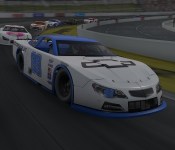
Lowe Weathers Martinsville Storm to Claim Back-to-Back Wins
Ridgeway, VA — The Bootleg Racing League pressed on with Season 26 of the SteelCraft Structures Super Late Model Series on the tight confines of Martinsville Speedway, where a bruising 100-lap feature tested patience, precision, and tire management. In a race shaped by constant restarts and late-race tension, James Lowe methodically carved his way forward from a mid-pack starting position to earn his second consecutive victory of the season.
With a 13-car invert from the North Wilkesboro opener, Chris Davis led the field to green from the pole alongside John Wilson. From the outset, it was clear Martinsville would be a very different challenge than the previous round, with the bottom lane quickly becoming the preferred groove and passing opportunities at a premium. The night began with early complications even before racing settled in, as Lowell Jewell and Kenny Allen dealt with equipment and technical issues that left both drivers playing catch-up from the opening laps. Further back, defending champion Kurt Smith and rookie Kyle Feimster were also hampered early, never fully able to settle into a rhythm.
Once underway, the race evolved into a chess match of restarts. Davis controlled the pace at the front, frequently manipulating the field on launches to keep challengers boxed in behind him. While effective, the tactic contributed to several congested moments deeper in the pack, as the tight entry into turn one left little margin for error. Cautions stacked up, and each restart reset the balance of power.
Starting 13th, Lowe remained patient through the chaos. Rather than forcing the issue, he picked off positions methodically, keeping his car intact while others struggled with overheating tires and worn brakes. By the midpoint of the race, Lowe had reached the front group and began pressuring Davis, the two veterans trading precision shots at the same narrow strip of pavement. Eventually, Lowe capitalized on a small opening on the inside, completing the pass and taking control of the race as the laps wound down.
Behind them, two notable recoveries unfolded. Luke Logan Allen quietly delivered one of the drives of the night, starting deep in the field and avoiding trouble to climb steadily forward. Jewell, despite a late start coming off pit road and falling half a lap down, used well-timed cautions and wave-arounds to claw his way back into contention, turning what looked like a lost night into a strong finish.
The closing laps brought everything to a head with a green-white-checker finish. Davis attempted to out-time Lowe on the restart, but Lowe launched cleanly and never relinquished control, surviving the final sprint to the line. He crossed the stripe ahead of Davis, while Allen completed a breakthrough podium run in third.
Lowe’s victory makes it two wins from two starts as the series heads next to Five Flags Speedway, a venue where he has traditionally been strong. With momentum firmly on his side, the rest of the field now faces an early-season challenge: finding a way to disrupt Lowe’s rhythm before the championship picture starts to stretch out.
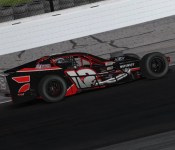
Teapot Holds the Throne in a Tense Iowa Season Opener
Newton, IA — Red Light Racing opened Season 15 of the Skitter Creek Modified Series with a tightly contested 70-lap feature at Iowa Speedway, where the focus quickly narrowed to a familiar championship battle. Defending three-time champion Eric “Teapot” Stout entered the opener with a target on his back, while four-time champion Dalton Williamson returned to competition after a lengthy absence, eager to reestablish himself among the frontrunners. By the end of the night, Iowa delivered a race defined by discipline, strategy, and a final restart that decided everything.
Stout wasted no time asserting control from the pole, immediately absorbing pressure from Bill Benedict on the outside. While Iowa’s 7/8-mile tri-oval offers multiple lanes, the bottom groove proved decisive early, especially with the notorious bump in turns one and two threatening to shove cars up the track if mistimed. Stout planted his car on the preferred line and began doing what champions do best, managing the race rather than forcing it. Behind him, Andy Lewis emerged as the early aggressor, repeatedly peeking underneath in search of a way past. Though Lewis showed flashes of speed, Stout countered with patience, leaving the door open down low while preserving his tires on the higher arc.
The race’s strategic fork arrived under caution following contact between rookie Hayden Austin and AJ Hamel. While Stout and Williamson elected to stay out and protect track position, Lewis and Jeff Aho rolled the dice, surrendering top-five spots in exchange for fresh rubber. Stout later admitted the decision was not made lightly, recalling past races where pitting late offered speed but no opportunity. That gamble grew riskier as chaos followed, including a multi-car incident in turn one and a confusing restart where Williamson was briefly scored as the leader when the yellow flew mid-pack shuffle.
With the laps dwindling, the opener came down to a Green-White-Checker finish, the kind Iowa seems to summon on command. League rules preventing the leader from jumping the restart influenced Stout’s lane choice, as he hugged the inside to shorten the run into turn one. When the green dropped, Stout and Williamson charged forward side by side, the returning champion testing every inch of asphalt available. Ethan “The Mountain” Troutman loomed just behind, ready to capitalize on any mistake.
But no mistake came. Stout stretched his line wide through the final corners, shutting down Williamson’s last assault and securing a wire-to-wire victory that spoke less of dominance and more of control. Williamson crossed the line second in an impressive return, having carefully managed his right-front tire all night. Troutman completed the podium, continuing the consistency that marked his previous season.
Behind them, Bradley Stefane and Fred LeClair rounded out the top five, while Lewis salvaged eighth after his late pit gamble. Benedict’s night ended just outside the top ten in 11th, narrowly clearing his spotlighted over/under despite late-race contact.
As the series heads next to Langley Speedway, a venue Williamson openly calls a favorite, the opening chapter has set the tone. The king has not stepped aside, the challenger has not lost his edge, and Season 15 is already shaping up to be less about nostalgia and more about survival.
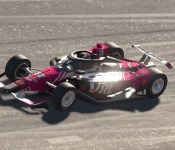
Klendworth Rolls the Dice and Wins Big in Vegas Thriller
Las Vegas, NV — Round 2 of the ISRA Sim Gaming Expo Open Wheel Series took the field from Fontana’s wide-open rhythms to the unforgiving glare of the virtual Las Vegas Motor Speedway, where heat, tire wear, and one perfectly timed gamble turned the night into a desert showdown. Under scorching conditions and with strategy hanging heavier than the neon haze on the Strip, two-time defending champion Kyle Klendworth played his hand to perfection, snatching victory in a three-wide drag race to the line by just 0.02 seconds.
Once the green flag waved, the racing wasted no time heating up. With ambient temperatures hovering near 87 degrees and track temps soaring to a brutal 109, tire management immediately became the story beneath every pass. Mason Mitchum took full advantage early, leading the opening laps and setting the pace while the field quickly learned that overdriving the car meant paying interest later.
As the race settled into long green-flag runs, Matt Taylor emerged as the class of the field. Using a sharp undercut during the first pit cycle around lap 50, Taylor vaulted to the lead and steadily stretched the gap, at one point holding nearly a four-second advantage. Behind him, Klendworth and Caleb Benci began a patient chase, swapping positions lap after lap in a calculated draft-assisted dance, conserving just enough tire to stay in striking distance.
Klendworth’s race quietly pivoted on fuel math. By extending his first stint six laps longer than Taylor, he set himself up for a shorter final fill, trading early comfort for late-race flexibility. That decision loomed large as the laps ticked away and Taylor’s once-commanding margin began to evaporate under pressure.
Everything unraveled with eight laps remaining. While battling Klendworth side-by-side for the lead, Taylor brushed the wall and tangled with a lap car, triggering the race’s only caution and scattering contenders across the track. The yellow flag froze the field and forced a defining choice. Taylor and Mitchum stayed out, clinging to track position on worn tires, while Klendworth, Chris Stofer, and Craig Forsythe dove to pit road for fresh Firestones, betting everything on grip over position.
The restart delivered instant chaos. With only a handful of cars on the lead lap, the fresh tires came alive immediately. Klendworth and Stofer sliced forward, their cars sticking to the asphalt while others fought fading rubber. On the final lap, the leaders charged into the closing corners three-wide, the outcome undecided until the final heartbeat. Klendworth threaded the needle through the middle, his tires clawing just enough to edge ahead at the stripe.
Klendworth crossed the line first, the gamble paying off in the most Vegas way possible. Stofer followed a blink later in second, while Forsythe calmly navigated the madness to secure third and valuable points. Taylor, despite leading the most laps on the night, settled for fourth, with Richie Hearn completing the top five.
As the lights dimmed on Las Vegas, the series left town with momentum swinging and the title picture tightening. Next up is Gateway, where the dice will be back in the cup holder, but the pressure will be just as high, and the margins just as thin.
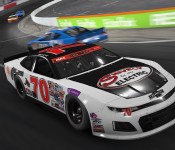
Altice Steals Season 33 Opener in North Wilkesboro Carnage
North Wilkesboro, NC — The Bootleg Racing League opened Season 33 of the Late Model Invitational Series with a bruising, controversy-soaked 100-lap feature at the virtual North Wilkesboro Speedway. The race carried historical weight, arriving 4,284 days after the league’s inaugural event, and much of the pre-race focus centered on James Lowe’s pursuit of becoming only the second driver in league history to win three championships. Instead, the night unraveled into a survival test defined by tire decay, hard racing, and a final-lap wreck that handed victory to the last driver anyone expected.
With the top 13 finishers from the previous season inverted, Allen Wannamaker rolled off from the pole and immediately asserted control. Using the preferred inside lane, Wannamaker led the opening 41 laps and looked every bit like the driver to beat. As the run stretched past lap 20, the track began to widen just enough for the high line to come alive, allowing drivers like Mike Holloway and Rubin Altice to start probing for momentum. Under strict “run what you brung” rules with no tire changes and no fast repairs, every lap demanded restraint. Pushing too hard early would leave rear tires feeling like melted butter by the closing stages.
The tone of the race shifted sharply once Chris Davis, living up to his “Mr. Aggressive” reputation, began leaning on Steve Hilbert. The pressure boiled over into a multi-car incident that swept up Hilbert, defending champion James Lowe, and Altice, instantly scrambling the running order and igniting debate over racecraft. North Wilkesboro’s layout only amplified the tension, with the downhill plunge into Turn 1 and uphill charge into Turn 3 punishing impatience and magnifying mistakes. Amid the chaos, a moment of sportsmanship stood out when Tre Blohm made contact with Adam Schoen, triggering a spectacular save that kept Schoen off the wall, even as Blohm’s own race soon unraveled.
As the race entered its final third, a new star emerged. Rookie Chris Worrell, making his series debut, methodically worked his way to the front and appeared to have the field covered on pace. Lap after lap, Worrell looked poised to cap his first BRL start with a statement win. That confidence evaporated when a late caution involving Kyle Feimster and Davis set up a green-white-checker finish, a sequence that drew sharp criticism from the broadcast booth as tempers flared and lines blurred between hard racing and retaliation.
On the final restart, Worrell controlled the field and powered through the final lap with the checkered flag seemingly in sight. Then everything went wrong. Allen Wannamaker, still circulating after earlier troubles, was caught in a collision and left stationary in the middle of Turn 4. With nowhere to go, Worrell slammed into the stopped car just yards from the finish line, a crushing end to what had been a brilliant debut.
Out of the smoke and debris emerged Rubin “The Quiet Man” Altice. Scarred from earlier incidents but still rolling, Altice threaded his way through the wreckage and crossed the line first, later admitting he simply found himself in the “right spot at the right time.” Behind him, Adam Schoen completed a remarkable drive from 22nd to finish second, while Brennan Myers climbed from 21st to claim third, both navigating the chaos with patience and timing.
What began as a milestone celebration ended as a reminder of North Wilkesboro’s unforgiving character, where speed alone is never enough and sometimes the quietest survivor is the one who takes the trophy. The series now turns to Martinsville Speedway for Round 2, where another inverted grid promises fresh drama and very little forgiveness.
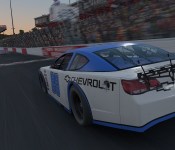
Lowe Survives Late Chaos at North Wilkesboro to Claim Super Late Model Opener
North Wilkesboro, NC — The Bootleg Racing League launched Season 26 of the SteelCraft Structures Super Late Model Series with a tense, strategy-heavy 100-lap opener at a freshly resurfaced North Wilkesboro Speedway. What the new surface gave in smoothness, it took away in mercy. With no tire changes allowed, drivers were forced to balance aggression and restraint, and when the night spiraled into late-race chaos, it was James Lowe who kept his composure to emerge with the victory.
Lowe led the field to green from the pole in a striking black-and-green scheme, flanked by Louis Flowers on the outside. While the repave erased many of North Wilkesboro’s traditional bumps, it introduced brutal tire degradation, turning the race into a long exercise in patience. Trouble arrived almost immediately when Flowers slapped the wall on the opening lap, briefly inviting Tre Blohm to challenge for the lead. Behind them, defending champion Kurt Smith endured heavy contact early and was sent tumbling down the order, his night instantly turned into a recovery mission.
The first major caution arrived around lap 11 after Lowell Jewel spun, but the real damage unfolded moments later. Jeffery Hardin, last season’s runner-up in points, entered Turn 3 too aggressively, triggering a multi-car stack-up that involved five machines. Under yellow, Hardin summed up the night’s defining challenge perfectly, warning that overheated rear tires would “turn to butter” and leave drivers helpless. From that point on, survival and tire preservation became inseparable goals.
As the race settled into its middle phase, the charge of Adam Schoen became one of the standout stories. Starting shotgun on the grid, Shane carved through traffic, gaining 11 spots in just 26 laps. At the same time, Rubin Altice, the ever-calculated “Quiet Man,” put on a defensive clinic, using a wide, fading entry to blunt faster cars behind him, including Shane and Hardin, forcing them to burn precious tire life just to stay close.
One of the night’s most talked-about moments came courtesy of Tre Blohm. While battling Schoen, Blohm made slight contact that nearly sent Schoen around in what the booth dubbed the “save of the year.” Rather than press on, Blohm immediately brought his car to pit road and parked it, serving himself a voluntary penalty. The gesture drew widespread respect and underscored the sportsmanship that still defines the series, even in its most competitive moments.
Up front, Lowe appeared firmly in control. With laps winding down, he had stretched his advantage to nearly two seconds over Kyle Feimster, who had finally worked his way past Flowers into second. Then everything unraveled. With only a handful of laps remaining, a violent collision between Joe Segalla and Kurt Smith scattered cars across the racing surface. Shockingly, the caution flag never flew. Lowe, sensing danger, checked up hard to avoid the wreckage, instantly erasing his hard-earned gap.
Feimster pounced. What had been a comfortable margin vanished in an instant, and on the final lap he was glued to Lowe’s rear bumper, closing to within two tenths of a second. Lowe later admitted his “Spidey senses were tingling” as he anticipated trouble ahead and backed off early. That instinctive decision proved decisive. Despite immense pressure through Turns 3 and 4, Lowe held the preferred line and dragged his worn tires across the finish line first, sealing a win that was anything but routine.
After the race, Lowe credited awareness and restraint for the victory, even taking a moment to thank his Aunt Mary Alice for tuning into the broadcast. Feimster, while frustrated by the lack of a late caution, acknowledged that he had more tire left but praised Lowe’s ability to manage the situation under pressure. Flowers rounded out the podium in third, thrilled with a strong result in his first season despite admitting his car grew too tight too early in the run.
Behind the top three, Hardin recovered to finish fourth, followed by Altice, Schoen, Jewel, Chris Worrell, Jeff Sharp, and a battered but determined Kurt Smith in tenth. The series now turns its attention to Martinsville Speedway next Friday, where an inverted top 13 will shake up the grid once again and set the stage for another unpredictable night.
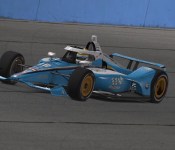
Forsythe’s “Chronic Fuel Saving” Pays Off in Photo Finish at Fontana
Fontana, CA — The ISRA Sim Gaming Expo Open Wheel Series opened its third season with a blistering, brain-burning duel at the virtual Auto Club Speedway, where raw speed took a back seat to discipline, patience, and technical precision. What unfolded over 125 laps was less a sprint and more a high-speed chess match, one that ended in a jaw-dropping three-wide drag race to the line. When it was over, Craig Forsythe emerged victorious by just 0.01 seconds, edging out two-time defending champion Kyle Klendworth in one of the closest finishes the series has seen.
Mason Mitchum led the field to green from the pole under warm Southern California skies, guiding a tightly packed group of Dallara IR-18s into an early rhythm defined by restraint. The draft was so strong that the field quickly formed a peloton, nose-to-tail and wheel-to-wheel, with the lead pack punching a hole in the air that kept everyone locked together. Klendworth and Hugo Galaz traded looks at the front, but the real story early was not who was leading, it was how little anyone wanted to. Drivers deliberately ran lean fuel maps, sacrificing short-term speed in hopes of stretching their windows far enough to unleash full power at the end.
That careful balance was shattered on lap 43 when the race’s only caution flew. A four-wide squeeze on the front stretch turned chaotic when contact between Garry Lovern and Matt Taylor cascaded into Jim Herrick being sent hard into the outside wall. The yellow flag triggered a pit cycle that instantly reshaped the running order, and for several contenders, it was catastrophic. David Sirois, Mike Rigney, Mason Mitchum, and Chris Stofer all picked up pit road speed penalties, effectively erasing their chances in a race where track position and clean execution were everything.
As the field regrouped, one of the most impressive charges of the night took shape. Mark Murphy, who had started deep in 20th, committed to the high line that many others avoided and began carving through traffic with confidence and momentum. In just a handful of laps, Murphy gained 17 positions, muscling his way into the lead pack and proving that Fontana still rewarded bravery when paired with control.
Complicating matters further was the IR-18’s hybrid system, which demanded constant attention. Klendworth later explained that brake bias management was critical, as regenerative braking could abruptly shift stopping power rearward if the driver wasn’t proactive, a mistake that could easily snap the car around, especially entering pit road. Those who managed the system well stayed alive; those who didn’t quietly fell back.
By the final ten laps, the race had distilled itself into a five-car showdown featuring Craig Forsythe, Kyle Klendworth, Mark Murphy, Richie Hearn, and Chris Ragan. Forsythe, self-described as a “chronic fuel saver,” had played the long game all night, sitting in the draft, sipping fuel, and refusing to show his hand. That patience paid off when it mattered most, allowing him to run full power for the final sprint while others were still rationing.
The last lap was pure theater. The leaders went three-wide through Turns 3 and 4, Klendworth glued to the bottom, Murphy charging the high side, and Forsythe threading the needle in the middle. With the finish line rushing toward them, Forsythe found just enough momentum to surge ahead at the stripe. Four cars crossed the line within 0.05 seconds, but it was Forsythe who claimed the win by the slimmest of margins.
The victory was a masterclass in restraint and execution, a reminder that in modern open-wheel racing, intelligence can be just as lethal as outright pace. With the season now underway, the series heads to Las Vegas Motor Speedway for Round 2, and the rest of the field will be tasked with finding an answer to the quiet, calculated approach that just rewrote the script at Fontana.
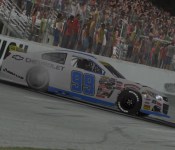
Lowe Navigates Late-Race Chaos to Claim Inaugural Winterfest Derby Title
Lakeland, FL — The 2026 racing season roared to life with a firecracker of an opener as the Bootleg Racing League and Yesteryear Racing joined forces for the inaugural Winterfest Derby at the virtual USA Speedway. The 200-lap ARCA stock car feature was a relentless test of tire discipline, patience, and survival, and when the smoke finally cleared, it was veteran standout James Lowe who emerged victorious, capturing the first Winterfest crown.
Kyle Feimster, the reigning BRL Late Model Rookie of the Year, set the early tone after earning the pole in qualifying. Although Chris Worrell briefly grabbed the lead on the opening lap, Feimster quickly reclaimed control and began stretching the field, eventually building a lead of more than a second and a half. His pace was rooted in careful tire conservation, though Feimster acknowledged early that several drivers behind him were likely saving even more aggressively for the long haul. The opening stages never truly settled into a rhythm, however, as cautions repeatedly interrupted the flow. Early incidents included a lap-nine spin by Chris Haizlip and a heavy wall strike on lap 14 involving Ed Foster and Allen Wannamaker, setting the tone for a night where survival would matter as much as speed.
As the race crossed the halfway mark, tire wear became the defining factor. Most of the field committed to a mandatory four-tire stop around lap 110, shuffling the running order once again. During that sequence, Lowe managed to slip ahead of Feimster on pit exit, briefly taking control before Feimster fought back on the restart. Around them, long-run strategy continued to shape the contenders. Tre Blohm, known as “The Caveman,” showed impressive pace over extended runs, but his charge was complicated by an improper pit exit penalty that dropped him to the rear. Blohm responded with a determined recovery drive, slicing back through traffic and reestablishing himself inside the top five before the closing laps.
The complexion of the race changed entirely with just 11 laps remaining. A fierce battle for second place involving Dalton Williamson, Feimster, and Worrell erupted into the night’s defining moment when contact sent Feimster and Williamson hard into the wall. The “Big One” eliminated the fastest car in the field and abruptly handed the advantage to Lowe, who inherited the lead as the field lined up for a late sprint.
The Winterfest Derby ultimately came down to a dramatic green-white-checker finish. On the final restart, Lowe and Worrell thundered side by side into Turn 1, while Blohm attempted a bold, all-or-nothing move to the inside. The gamble didn’t stick, as Blohm looped the car, allowing Lowe to break free. With clean air finally in front of him, Lowe pulled away and took the checkered flag to secure the inaugural Winterfest Derby victory.
Lowe was joined on the podium by Worrell in second and Jerry Isaacs in third, the latter rebounding impressively from an earlier solo spin. In victory lane, Lowe admitted he felt he had more of a second-place car for much of the night and credited a timely caution and a bit of racing luck for swinging the result in his favor. The win earned him the unique “Soaring Freedom Eagle,” also known as the Baldi Trophy, a 24-inch handmade steel statue crafted by Metal Art of Wisconsin.
Behind the headline result, several performances stood out. Lloyd Moore charged forward to gain 19 positions and finish eighth, while Glenn Jamieson spent much of the night inside the top five before late-race contact derailed his podium hopes. In the end, the Winterfest Derby delivered exactly what it promised: a brutal, unpredictable marathon where patience was priceless, mistakes were costly, and survival proved just as powerful as outright speed.


 Virtual Grip Network